Military Balance of Power in the South Caucasus
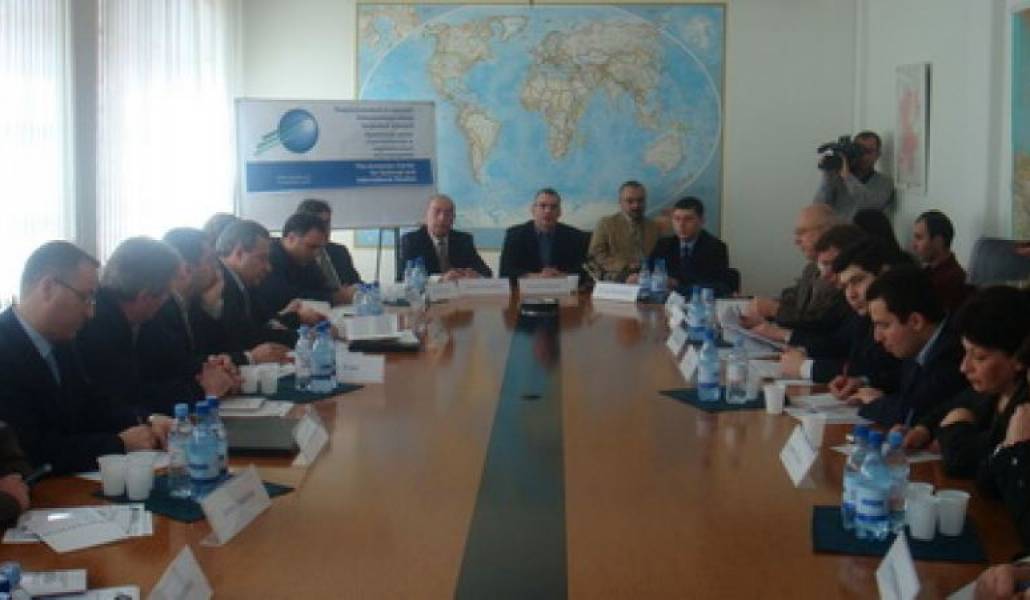
The Armenian Center for National and International Studies (ACNIS) convened a special roundtable seminar discussion to present a new special publication entitled, "The Military Balance of Power in the South Caucasus."
Welcoming the participants and attendees, ACNIS Director Richard Giragosian explained that the new ACNIS report, the second in a series of ACNIS Policy Briefs, examines recent shifts in the military and security situation in the region, including a specific focus on developments since the August 2008 war in Georgia. He further noted that the report includes an assessment of the current state of the Azerbaijani military, and an analysis of the implications for the security of Armenia and Nagorno Karabagh.
Giragosian noted that "nearly eight months after a brief, but deadly, war in Georgia in August 2008, the outlook for security and stability in the South Caucasus remains far from certain," and that the war "had dramatically altered the geopolitical landscape of the region, consolidating a clear reassertion of Russian power and influence and forcibly 'resolving' two of the region's three formerly 'frozen' conflicts." He also stressed that "the Georgian war raised new doubts over Georgia's strategic role as the regional 'center of gravity' for the West and effectively ended Georgia's hopes to join the NATO alliance."
"But most importantly," he argued, "was the fact that the August 2008 war further demonstrated a dramatic shift in the region's delicate balance of power, which has already reconfigured the threat perception and military posture of the region." More specifically, Giragosian asserted that "although it is now clear that the shifting military balance of power remains one of the most crucial considerations for regional security and stability, the real imperatives are internal in nature and depend far more on institutional legitimacy, the rule of law and good governance, and on local economics and politics than grand geopolitics."
For his part, ACNIS Director of Administration Dr. Karapet Kalenchian presented an assessment of the "Political Military Problems of the South Caucasus Region." He emphasized that "the regional neighbors have huge armies, whereas the regional countries possess armed forces that can withstand only one another, and, objectively speaking, they can not stand against the military potential of the neighboring countries." Therefore, Kalenchian argued, the political component of stability assumes a pivotal role in terms of the security of the regional countries. "In other words, the armed forces in the region cannot be self-sufficient factors in the security of those countries. And after the events that occurred in Georgia last August, Azerbaijan would hardly carry out any military operation against Nagorno Karabagh without the consent of Turkey, Russia, the United States, England, and France, which are those countries that have huge interests in the South Caucasus region. Also, we must not exclude Iran. And even if Azerbaijan receives that consent, it will need to think considerably before taking any military action. The Georgian incident is always evident for all," Kalenchian stated.