“Causes may be worse than the effects”
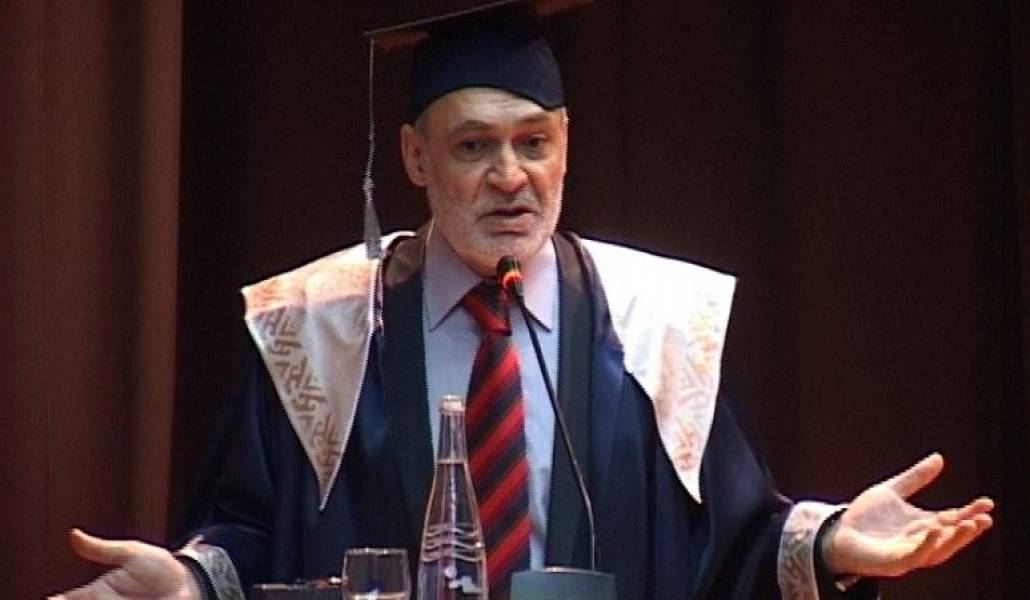
Today Director of the New York branch of the Institute of Democracy and Cooperation Andranik Mihranyan delivered a lecture on the latest bloody revolutions in the Arab World and touched upon their impact on post-Soviet countries at the Pedagogical University. Before delivering his lecture, Mihranyan was awarded the title of Honorary Doctor of the Armenian State Pedagogical University by Rector Ruben Mirzakhanyan.
According to Mihranyan, the events taking place in the Arab World can't have an impact o Armenia since the motives for an upheaval vary in each country. However, Mihranyan stressed that all those countries have one thing in common-the person in power has led the country for 20, 30 and even 40 years by removing people from his environment and not allowing circulation.
"There is no such thing in Armenia," said Mihranyan, adding that there is another dangerous factor missing in Armenia and that is inter-religious, inter-ethnic conflicts.
Mihranyan believes change of power is impossible in Armenia since the political elite is united as one and revolutions originate only when there is no unity within the government and the street factor comes into play. In general, Mihranyan says the most dangerous way of change of power is through the streets.
"Change of power should be implemented through elections," said Andranik Mihranyan. But the political scientist who has been living outside of Armenia for the past 43 years didn't clarify what the people should do when elections are constantly falsified.
Mihranyan added that there are no grounds for a revolution in Armenia, but there is a great danger of a cold and hot war. "Armenia is in a hot war with Azerbaijan and a cold war with Turkey and the internal stability can be very dangerous for both countries."
Mihranyan also believes that out of all three governments, the Sargsyan-Nalbandyan duo has led the most perfect foreign policy, which has raised Armenia's reputation in the world, starting from the Armenian-Turkish relations and ending with the Artsakh issue.