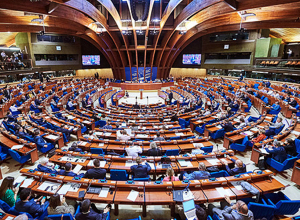
STATEMENT BY THE MINSK GROUP CO-CHAIRS TO THE OSCE PERMANENT COUNCIL
Support A1+!The OSCE Minsk group co-chairs have addressed the OSCE Chairman-in-Office recently. Here is the whole text of the statement.
Mr. Chairmen,
Your Excellencies,
Ladies and Gentlemen,
In November last year the Minsk Group Co-Chairs reported to this Council that the two sides in the Nagorno-Karabakh conflict were poised to make a transition from negotiating to decision-making and that a historic breakthrough in the settlement of the conflict was possible in 2006. During the past seven months, we intensified our mediation efforts and worked hard to achieve the agreement of both sides on basic principles for a settlement. We visited Baku and Yerevan three times together and several more times separately, organized two meetings of the Ministers of Foreign Affairs of Armenia and Azerbaijan and two summits between Presidents Kocharian and Aliyev - first in Rambouillet in February and then in Bucharest in early June. For the first time since 1997, when the current format of the Co-Chairmanship of the Minsk Group was established, a joint Mission of Representatives of the Co-Chair countries at the Deputy Foreign Minister level traveled to the region in May in order to make clear to the presidents of both countries that 2006 is the necessary window of opportunity for reaching an agreement on Nagrono-Karabakh. In fact, the delegation of Russian Deputy Foreign Minister Grigoriy Karasin, U.S. Assistant Secretary of State Daniel Fried, and high-ranking French diplomat Pierre Morel – representing French Political Director Stanislaus de Laboulaye – told the two Presidents that our three countries expected them to take advantage of this opportunity by reaching an agreement on core principles for a settlement at their Bucharest summit in early June. Our deputy ministers told the two Presidents that an agreement on basic principles now, before the July G8 Summit in St. Petersburg, would secure broad international support and a high level of financial assistance for postconflict reconstruction and peacekeeping activities. We stressed – as always – the belief of our nations and, more widely, of the international community that the Nagorno-Karabakh conflict can be resolved in no other way than a peaceful one. Moreover, we stressed that both leaders need to prepare their publics for peace and not for war.
Mr. Chairman,
Our deputy ministers proposed to Presidents Aliyev and Kocharian a set of core principles that we believe are fair, balanced, workable, and that could pave the way for the two sides to draft a far-reaching settlement agreement. We continue to believe in these principles, and we urge the Presidents to embrace them as the basis for an agreement. Unfortunately, the Presidents chose not to reach such an agreement in Bucharest. As mediators in this process, we will not breach the confidentiality of their sensitive diplomatic dialogue, as we continue to hope that they will reach an agreement. At this juncture, though, it is our responsibility to you, Mr. Chairman, to this Council that has provided the funding for a very intensive series of negotiations, to the international community, and – perhaps most importantly – to the publics in Armenia and Azerbaijan, to acquaint you with the basic principles that we have put on the table for the consideration of the two Presidents. We note that the principles the Co-Chair countries proposed to the two Presidents were not developed in a vacuum, but follow on to nine years of detailed proposals that have been advanced by our predecessors. Even though those proposals were not accepted by the parties, that work of our predecessors gave us important insights and foundations. Our approach has been a modified one: we have not tried to solve all aspects of the conflict in one phase. Instead, our principles seek to achieve a major degree of progress but defer some very difficult issues to the future and envision further negotiations. In sum, they try to solve – in a practical, balanced way – what is immediately solvable. These principles include the phased redeployment of Armenian troops from Azerbaijani territories around Nagorno-Karabakh, with special modalities for Kelbajar and Lachin districts. Demilitarization of those territories would follow. A referendum or population vote would be agreed, at an unspecified future date, to determine the final legal status of Nagorno-Karabakh. The sides would commit to further negotiations to define the timing and modalities of such a referendum or population vote. Certain interim arrangements for Nagorno-Karabakh would allow for interaction with providers of international assistance. An international peacekeeping force would be deployed. A joint commission would be created to implement the agreement. International financial assistance would be made available for demining, reconstruction, and resettlement of internally displaced persons in the formerly occupied territories and the war-affected regions of Nagorno-Karabakh. The sides would renounce the use or threat of use of force, and international and bilateral security guarantees and assurances would be put in place. We note with respect to the idea of a referendum or population vote to determine the final legal status of Nagorno-Karabakh that such a vote would be the product of a negotiated agreement between the two sides. Suitable pre-conditions for such a vote would have to be achieved so that the vote would take place in a non-coercive environment in which well-informed citizens have had ample opportunity to consider their positions after a vigorous debate in the public arena.
Mr. Chairman,
This is what we have proposed to the two Presidents, but they failed to agree. Nonetheless, we have heard both sides say repeatedly that they have never before been so close to an agreement. It would be a tragically wasted opportunity for the two Presidents to let this window of opportunity close in 2006 without even the basic principles in place for a future peace agreement for Nagorno-Karabakh. As you know, election cycles are approaching, first in Armenia and then in Azerbaijan during 2007-2008. We have seen before the negative effect that national elections can have on negotiations, and we continue to believe that now is the time for the two Presidents to summon the political will to take a courageous step forward together toward peace.
Mr. Chairman,
As Co-Chairs, we have reached the limits of our creativity in the identification, formulation, and finalization of these principles. We do not believe additional alternatives advanced by the mediators through additional meetings with the sides will produce a different result. We hope that the Permanent Council will join us in urging the parties to the conflict to reach an agreement as soon as possible based on the core principles we have recommended. If the two sides are unable to agree on those principles we have put forward, we believe it is now contingent upon them to work together to reach an alternative agreement that both find acceptable. We remain ready to assist. As mediators, however, we cannot make the difficult decisions for the parties. We think the parties would be well-served at this point by allowing their publics to engage in a robust discussion of the many viewpoints on these issues. We are confident that neither society wants renewed conflict, and we urge the leaders of Armenia and Azerbaijan to work with their publics and to work with each other to formulate an agreement on core principles that both find acceptable. Ultimately, it is the two sides that will be held accountable by their peoples and by the international community if their actions lead to war and not peace.
Mr. Chairman,
We see no point right now in continuing the intensive shuttle diplomacy we have engaged in over the past several months. We also see no point in initiating further presidential meetings until the sides demonstrate enough political will to overcome their remaining differences. Of course, the Co-Chairs will remain available to both parties to serve faithfully and impartially as mediators. Acting in complete unity among the mediators, we have delivered a product reflecting our best efforts, and we strongly believe that it is now time for the two Presidents to take the initiative for achieving a breakthrough in the settlement process. It is the only way to secure the positive results already achieved through the last two years of negotiations, in order not to restart them later from scratch. We will remain vigilant. We will continue our analysis and close consultations among ourselves in our unified and effective framework, in our continuing capacity as Co-Chairs of the Minsk Group, supported by Ambassador Kasprzyk and his team. We will be ready to reengage if indeed the parties decide to pursue the talks with the political will that has thus far been lacking. In conclusion, Mr. Chairman, we would like to express our sincere gratitude to the Chairman in Office, Minister de Gucht, whose close interest and constant attention to the issues of the Nagorno-Karabakh settlement, including his introductory remarks before the last meeting of two Presidents in Bucharest, have contributed greatly to our work in the first half of 2006.