Peacekeepers receive €100 a day
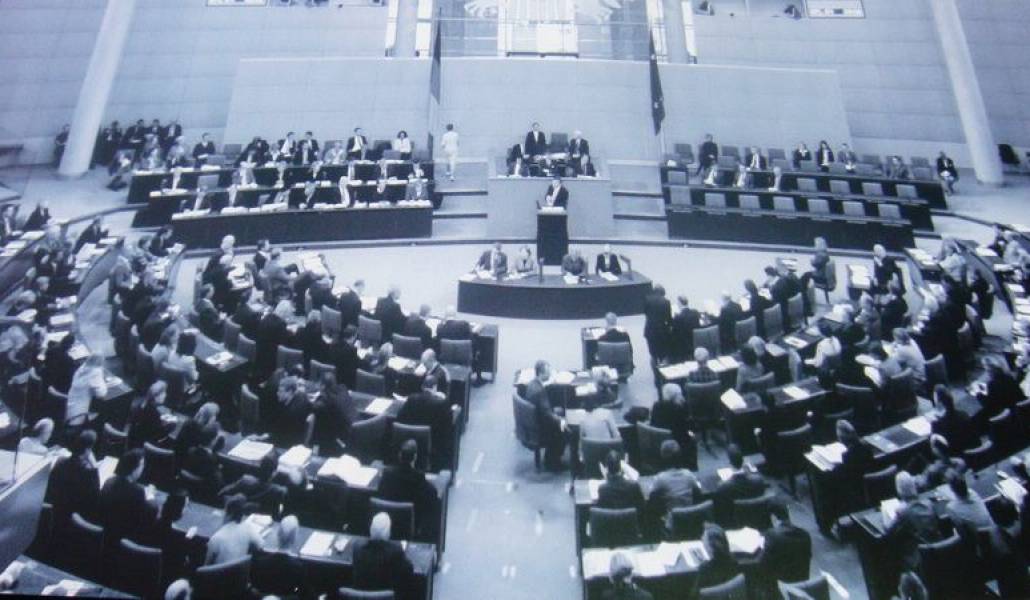
The armed forces of the Federal Republic of Germany mark their 55th anniversary this year.
The Bundeswehr (Federal Defence Force) was founded in 1955, 10 years after the end of World War II.
After the reunion of the East and West Germany in 1989, the political situation radically changed in the country. If before the end of the Cold War, 521 000 soldiers serviced in armed forces, after the reunification of Federal and Democratic republics, the number of servicemen reduced by an agreement reached between the USSR, USA, France and Great Britain.
The collapse of the Soviet Union in 1991 further curtailed the mission of German armed forces and, given the absence of NATO's main rival, Germany cut down the number of Bundeswehr soldiers making it 370 000 in 1994.
More than 250 000 people have served in the German armed forces since 2006, among them 188 000 regular and contract soldiers, 34 771 term soldiers (recruited for 9 months) and 27 980 soldiers who want to extend their service to 24 months.
By the way, Germany has only 200 generals for 250 000 servicemen while the Armenian army has 100 generals.
The Bundeswehr has two headquarters in Bonn and Berlin.
The Minister of Defence, Karl-Theodor zu Guttenberg is a civilian. He has two representatives in the Bundestag.
A source from the Bundeswehr informed us that the army would be downsized to 150 000 soldiers. Logically, the budget will be respectively curtailed.
The Bundeswehr is a "tool" to implement the country's comprehensive security and defence policy.
As a key member of NATO, Germany supports peacekeeping operations undertaken by its allies in various countries. To date, about 200 thousand German soldiers have participated in peacekeeping operations. Under the UN auspices, 6800 German servicemen are presently deployed abroad - 600 - in Afghanistan, 1400 - in Kosovo, 800 - in other countries.
We learnt from an anonymous source that a soldiers carrying out a peacekeeping mission overseas receives €100 a day. A regular serviceman gets a monthly salary of €4000.
Today, the main challenge for the Bundeswehr is terrorism. The country's main forces are engaged in the struggle against terrorism inside the country, outside its borders, in neighboring countries and in Europe in general, as Germany's security is largely conditioned by the security in Europe.
The Bundeswehr has a lot of women soldiers who are not allowed to serve on submarines and in landing troops.
Term soldiers are allowed to spend evenings at home if they live near the military unit.
A top official from German armed forces was surprised at A1+'s question concerning the most common types of crimes in the Bundeswehr. No homicides and suicides have been reported in the German army so far. The high-ranking official could only recall a case when a woman was killed on a naval vessel.
As for hazing (violence against younger conscripts in the army), the official said the cases are milder in Germany than in Armenia.
Diana Markosyan
Berlin-Yerevan