Armenia to pay EUR 50000 in connection with the case of Zalyan and Others v. Armenia
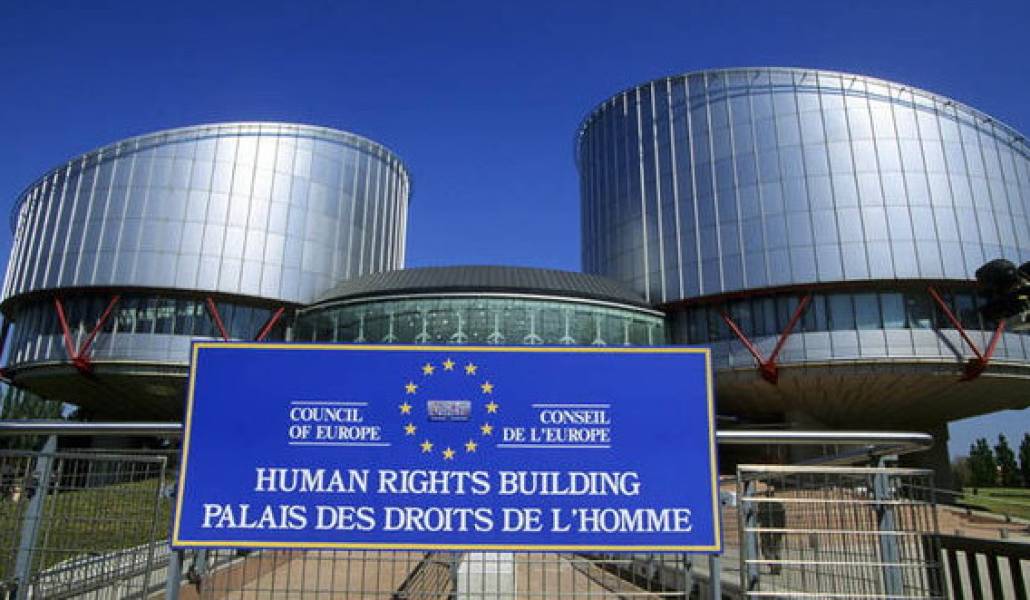
The European Court of Human Rights has issued the judgment on the case of Zalyan and Others v. Armenia( known as Madagis case). The Court held that Armenia was to pay Mr Zalyan 20,000 euros (EUR) and the other two applicants EUR 15,000 each in respect of non-pecuniary damage. The applicants, Arayik Zalyan, Razmik Sargsyan, and Musa Serobyan, are Armenian nationals who were born in 1985 and live in Vanadzor and Gyumri (Armenia). The case concerns their complaint of having been subjected to torture while performing their military service and Mr Zalyan’s complaint of having been unlawfully deprived of his liberty. According to the applicants, on 19 April 2004, while performing their military service on the territory of the unrecognised Nagorno Karabakh Republic, they were taken to the office of their military unit’s commander for questioning in connection with the murder of two servicemen in December 2003. The applicants maintain that they were beaten, threatened and verbally abused by law-enforcement officers in order to force them to confess to the murder. Subsequently they were taken to the military prosecutor’s office, where the ill-treatment continued before they were transferred to the military police department. During the next two days they were again questioned several times – officially as witnesses, although they were already being suspected of the crime – and they were continually beaten and threatened with the aim of extorting a confession. They were not allowed to eat or sleep, and were transferred between several law enforcement agencies blindfolded and handcuffed. According to the submissions of the Armenian Government, the applicants’ questioning in the office of the military unit’s commander, as witnesses in connection with the murder, took place only on 21 April 2004. During the questioning it was revealed that they had abandoned their military unit without authorisation in December 2003, which constituted a grave disciplinary offence; therefore, a disciplinary penalty of ten days in isolation was imposed on the applicants. They were subsequently taken to the military prosecutor’s office and later to the military police department, where they were placed in an isolation cell in order to serve their disciplinary penalty. At the request of the Military Prosecutor, however, the applicants were transferred on 23 April 2004 to Yerevan. On the following day, Mr Sargsyan confessed that he and the other two applicants had committed the murder. All three applicants were formally arrested as suspects. When questioned separately on the same day, the two other applicants denied their guilt. Subsequently the applicants were formally charged with murder and questioned as accused. Mr Sargsyan retracted his confession in May 2004 in a letter to the military prosecutor, maintaining that he had confessed because one of the investigators had threatened to harm his family members. On several occasions during the investigation and the trial against them, the applicants and their lawyers unsuccessfully complained to a number of authorities that they had been ill-treated by the investigators and that they had been unlawfully detained between 19 and 24 April 2004 without an arrest warrant. From early August to early November 2004 Mr Zalyan went on a hunger strike to protest against the allegedly unlawful actions of the authorities; following the deterioration of his health he was hospitalised for about two weeks. In May 2005 the applicants were convicted of murder and sentenced to 15 years' imprisonment. The conviction was based, in particular, on Mr Sargsyan's confession statement. The trial court found the applicants' allegations of ill-treatment unsubstantiated. In May 2006 the criminal and military court of appeal upheld the applicants' conviction and increased their sentence to life imprisonment. In December 2006 the court of cassation granted an appeal on points of law lodged by the father of one of the murdered servicemen in his capacity as a victim, who complained that the trial had been conducted with procedural violations, as a result of which three innocent servicemen had been convicted while the real perpetrators had never been brought to justice. The court of cassation quashed the judgments of May 2005 and May 2006 and remitted the case for further investigation; it also ordered the applicants' release from detention. 8 In October 2007 the Prosecutor General decided not to open criminal proceedings in connection with the applicants' alleged ill-treatment; he also found that the applicants' deprivation of liberty before 24 April 2004 had been a lawful disciplinary measure imposed by the commander of their military unit. In December 2012 the applicants were eventually acquitted. The applicants complain that they were subjected to torture while in custody from 19 to 23 April 2004 and that there was no effective investigation into their complaints. Mr Zalyan also complains that he was not provided with appropriate medical assistance and was not allowed to meet his family during his hunger strike. The applicants rely on Article 3 (prohibition of torture and of inhuman or degrading treatment). Relying further on Article 5 § 1 (right to liberty and security), Mr Zalyan also complains that his deprivation of liberty between 19 and 24 April 2004 was unlawful and that his detention from 24 August to 4 November 2004 was not authorised by a court as required. Finally, he alleges a violation of, in substance, Article 5 §§ 2, 3, and 4 (right to be informed of the reasons for arrest / entitlement to trial within a reasonable time or to release pending trial / right to have lawfulness of detention decided speedily by a court), complaining that he was given no reasons for his arrest, that he was not brought promptly before a judge and that he was not able to contest the lawfulness of his arrest between 19 and 27 April 2004.