Obama again avoids using 'G' word in his annual speech
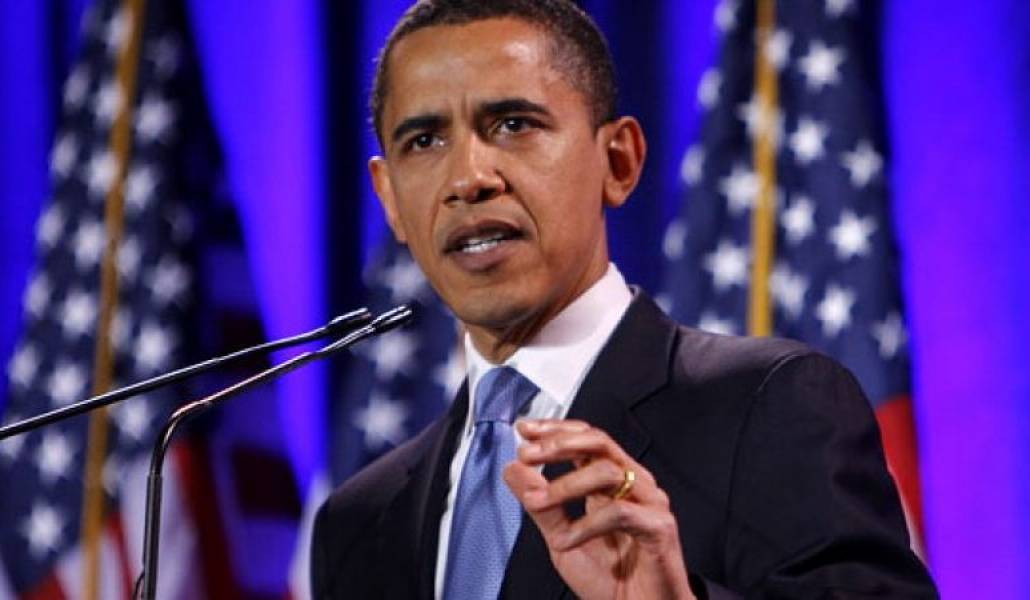
US President Barack Obama again used the term ‘Meds Yeghern’ in his annual speech on the eve of the 100th anniversary of the Armenian Genocide. In a statement issued by the White House, Obama used words and phrases like “massacre,” “a terrible carnage,” “horrific violence” and a “dark chapter of history”, but avoided the term genocide despite his 2008 election pledge to the Armenian American community. Barack Obama said the centennial of the Armenian atrocities is a time to remember all those who perished and to begin the process of historical reckoning. “This year we mark the centennial of the Meds Yeghern, the first mass atrocity of the 20th Century,” Obama said on Thursday. “Beginning in 1915, the Armenian people of the Ottoman Empire were deported, massacred, and marched to their deaths. Their culture and heritage in their ancient homeland were erased. Amid horrific violence that saw suffering on all sides, one and a half million Armenians perished. “As the horrors of 1915 unfolded, U.S. Ambassador Henry Morgenthau, Sr. sounded the alarm inside the U.S. government and confronted Ottoman leaders. Because of efforts like his, the truth of the Meds Yeghern emerged and came to influence the later work of human rights champions like Raphael Lemkin, who helped bring about the first United Nations human rights treaty. As the horrors of 1915 unfolded, U.S. Ambassador Henry Morgenthau, Sr. sounded the alarm inside the U.S. government and confronted Ottoman leaders. Because of efforts like his, the truth of the Meds Yeghern emerged and came to influence the later work of human rights champions like Raphael Lemkin, who helped bring about the first United Nations human rights treaty. “Against this backdrop of terrible carnage, the American and Armenian peoples came together in a bond of common humanity. Ordinary American citizens raised millions of dollars to support suffering Armenian children, and the U.S. Congress chartered the Near East Relief organization, a pioneer in the field of international humanitarian relief. Thousands of Armenian refugees began new lives in the United States, where they formed a strong and vibrant community and became pillars of American society. Rising to great distinction as businesspeople, doctors, scholars, artists, and athletes, they made immeasurable contributions to their new home. “This centennial is a solemn moment. It calls on us to reflect on the importance of historical remembrance, and the difficult but necessary work of reckoning with the past. I have consistently stated my own view of what occurred in 1915, and my view has not changed. A full, frank, and just acknowledgement of the facts is in all our interests. Peoples and nations grow stronger, and build a foundation for a more just and tolerant future, by acknowledging and reckoning with painful elements of the past. We welcome the expression of views by Pope Francis, Turkish and Armenian historians, and the many others who have sought to shed light on this dark chapter of history. “On this solemn centennial, we stand with the Armenian people in remembering that which was lost. We pledge that those who suffered will not be forgotten. And we commit ourselves to learn from this painful legacy, so that future generations may not repeat it.” US President Barack Obama pledged as a US Senator and presidential candidate to call the death of the Armenians genocide. After meeting with members of the American-Armenian community on Tuesday, senior White House officials said the President would not call the deaths genocide at the centennial commemoration in Yerevan, Armenia on April 24. Turkey, an important NATO partner for the United States, has lobbied hard to prevent the United States from calling the events of the First World War genocide, and has threatened to curb cooperation should the United States decides otherwise.