HHK members donate more blood than others
April 17 marks World Hemophilia Day.
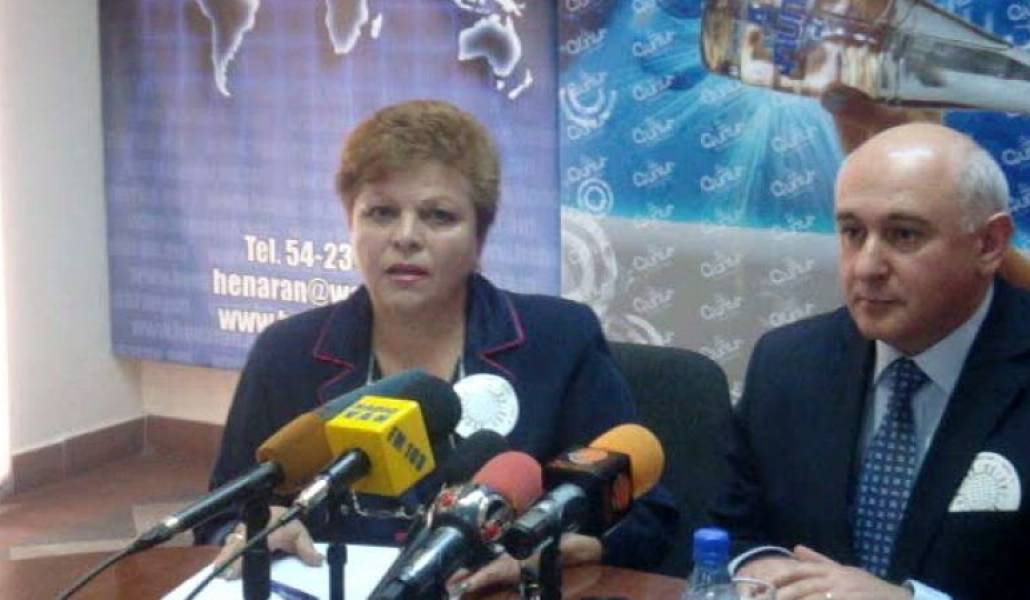
There are about 238 patients with hemophilia in Armenia. Forty-five of them are children under 18, says Tanya Khachatryan, Chairwoman of the Armenian Association of Hemophiliacs.
Hemophilia is an inherited disease in which your blood does not clot. People with hemophilia lack or have low levels of one of two blood-clotting substances, known as factor VIII and factor IX. As a result, they may bleed for a long time after an injury. They may also experience internal bleeding, especially in the joints. There are two types of hemophilia - type A and type B. If you have hemophilia A, you're missing or have low levels of clotting factor VIII. If you have hemophilia B, you're missing or have low levels of clotting factor IX. Hemophilia may cause bleeding which can damage human organs and tissues and may be life threatening.
Tanya Khachatryan says Armenia lacks medicine to give the patients. Hemophilia is treated by injecting the missing factor protein into the affected person's vein.
"We cooperate with various countries and receive humanitarian assistance from them. The problem is that we feel lack of blood donors," says chief hematologist Smbat Daghbashyan.
He says this is a big problem and its solution depends on the public interest.
Among the main donors, he singled out the young wing of the Republican Party of Armenia (HHK) who actively donate blood.
In conclusion, Mr Daghbashyan said that in the last four years 20 patients have been operated free of charge. Another 30 patients need surgical intervention in the near future.
World Hemophilia Day is an international observance held annually on April 17 by the World Federation of Hemophilia (WFH).
It is an awareness day for hemophilia and other bleeding disorders, which also serves to raise funds and attract volunteers for the WFH. It was started in 1989; April 17 was chosen in honor of WFH founder Frank Schnabel's birthday.