Ninety years passed after Smyrna disaster
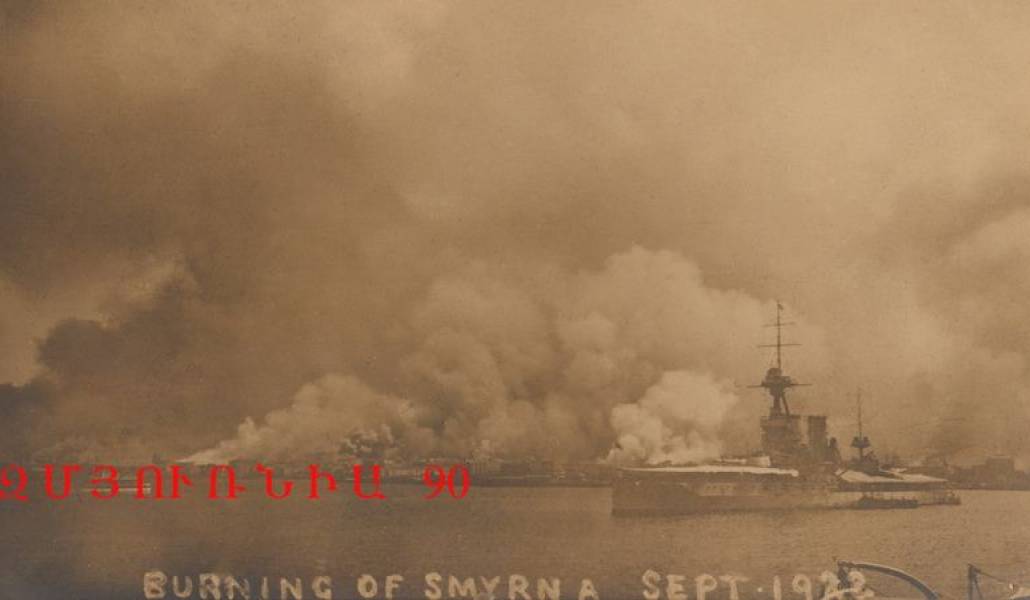
In September 2012, the Armenian Genocide Museum-Institute is organizing a temporary exhibition and an international conference dedicated to the 90th anniversary of Smyrna disaster displaying Smyrna Fire in the unique photographs and movies.
Armenians had settled in Smyrna, a leading business and cultural centers of Asia Minor, since ancient times and were living in Getezerk, Karap, Haynots Armenian districts.
In the 18th-19th centuries, Smyrna became a major cultural centre. The books and periodicals published in the publishing houses of the town had a significant role in the cultural, public and political life of the Armenians.
Mesropian School [founded in 1799], Hripsimyan Girl's School, and a number of private schools were working in Smyrna. There were four Armenian churches (the famous one was St. Stephanos church), a hospital and a theatre in Smyrna. The Armenian merchants of Smyrna had merchant's houses in Europe, Russia, India and Egypt.
Due to its multi-cultural and developed mode of life, Smyrna was called "Little Paris of the East".
Approximately 30 000 Armenians were living in Smyrna before 1922.
In September 1922 the Kemalists forces set fire to Smyrna and massacred the Armenians and the Greeks of the city. The premeditated fire of the city had the intention of terrifying the Christian population and making them leave the city forever. The streets were 'covered' with the corpses of the Armenians and Greeks. Many of them drowned when they were trying to set great hopes on the English, Italian and American ships.
Thus, Smyrna catastrophe became the last episode of the Armenian Genocide and the starting point of the Kemalists' "Turkey for Turks" state-building policy. Nowadays, Smyrna is famous by the Turkish name of Izmir and the majority of the inhabitants are Turks.