“Russia will pass “solo” to the EU”
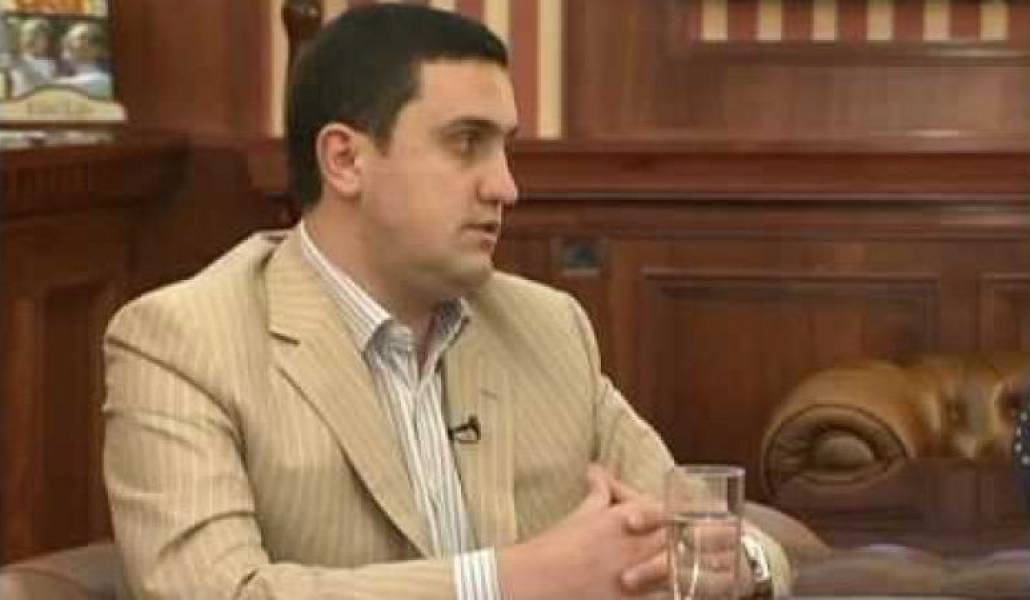
The European Union had expressed willingness to get involved with the Nagorno-Karabakh conflict last year, but it was only at the parliamentary level, says Head of the Center for European Studies, candidate of juridical studies Artur Ghazinyan told "A1+", commenting on the EU foreign policy organization head's announcement.
In her speech at the European Parliament yesterday, Vice-President of the European Commission, EU High Representative for Foreign Affairs and Security Catherine Ashton announced that Armenia and Azerbaijan must come to terms on the Nagorno-Karabakh conflict resolution before the 2012 elections in Armenia and the 2013 elections in Azerbaijan.
"However, we must see more in the upcoming months. We hope to see progress before the Eastern Partnership Summit to be held in Warsaw in September," Ashton mentioned. She also expressed regret that despite the calls made at the highest level, the Armenian and Azerbaijani Presidents didn't take advantage of the opportunity to compromise.
"Playing the role of mitigating the U.S. and Russian extremist positions, the European Union has broader opportunities to propose a more objective and just solution to the Artsakh issue," Artur Ghazinyan said.
According to him, the U.S. and Russia are participating in the process of negotiations with highly imperial ambitions, while the EU has a more stable value system and is capable of reaching the formation of an atmosphere of peace and tolerance in the region. Ghazinyan adds that Russia will reject its "solo" as a mediator.
"I think Russian Foreign Minister Lavrov will soon announce that Russia is passing its role to the European Union after three years," Ghazinyan said.
The expert says the increase of the European Union's role in the process of negotiations will change the philosophy of negotiations and will lead to the revision of several principles. The EU will start taking steps to make Nagorno-Karabakh return to the table of negotiations.
"Europe knows that there is simply no other way for a just solution. In that sense, the EU will lead the process. If not in the stage of developing, it will at least take on the role of guaranteeing the uninterrupted implementation of those principles."
Ghazinyan stressed Ashton's view that "the South Caucasus will finally be the region that it was supposed to be, that is, a bridge between Europe and Asia."
"There is an opinion that the South Caucasus must move toward the European Union, but we are seeing Europe move toward the South Caucasus. The countries of our region should follow the example of post-war countries of Europe that chose the path toward real cooperation and continue with that path to this day. The South Caucasus must be a strong region with the rule of democracy, law and human rights, which will not be risky for ensuring transit communication," Artur Ghazinyan said in closing.