Kocharyan on "March 1"
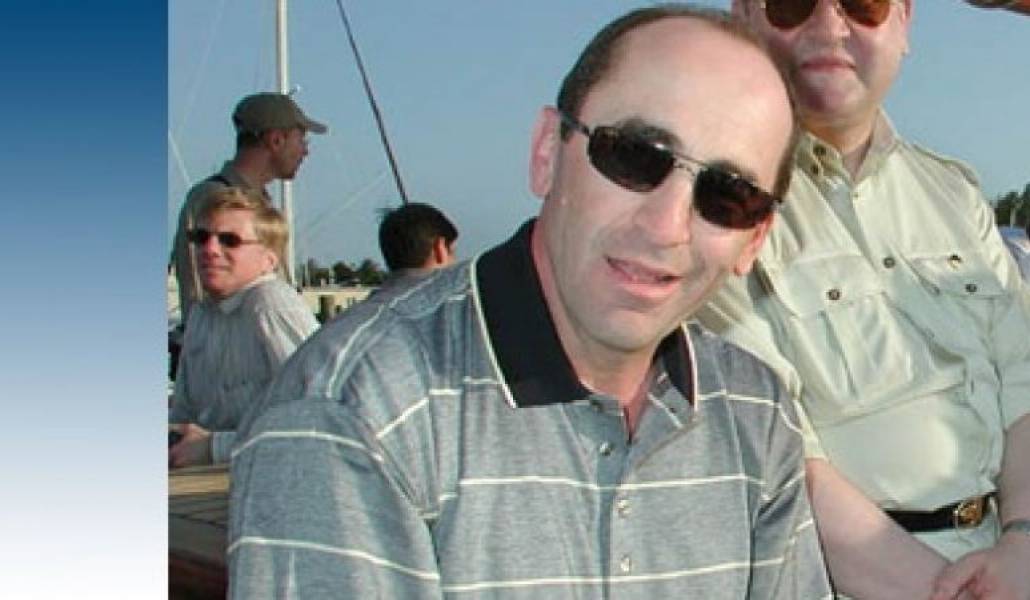
Robert Kocharyan gave an interview to "Mediamax". We present the interview in its entirety:
"Mediamax": Last month, the Armenian President assigned law-enforcement bodies to lead a further investigation into the case of "March 1". Several opposition members, as well as journalists and analysts immediately claimed that the "fingers" of that assignment are pointed toward you. There were also views that this process will neutralize the "Kocharyan factor" and will deprive you of the opportunity to be actively involved in politics. Are those assessments appropriate and do you expect such developments? How would you treat the president's assignment?
Robert Kocharyan: There were also various views on whom the tragic events of March 1 favored and the answer is very clear-the events favor those who constantly speculate those events, but definitely not the current or previous authorities. Isn't the total picture of the March 1 events quite clear? The whole country witnessed the events, the opposition's actions and the authorities' response.
The essence of those events is that the defeated candidate declared that he was the legitimate president and was prpearing to seize the presidential residence. Nothing more and nothing less. The situation further intensified when the opposition took illegal steps to reach that goal. I would simply like to remind that Yerevan entered a state of emergency when tens of cars had been robbed or burnt, the crowd was destroying everything and when we saw the first victims and injured among citizens and police officers. The city entered a state of emergency when it was clear that the situation was out of control and it caused a threat to constitutional order, as well citizens' security and belongings. It is simply impossible to deny this clear fact. Yerevan entered a state of emergency in accordance to the RA Constitution and according to the prescribed procedure, that is, it was affirmed by the parliament after an agreement with the NA Chairman and the Prime Minister. I think that measure should have been taken earlier. Perhaps it would have been possible to avoid seeing victims.
The president doesn't personally control the process of reinstating order on the streets or the use of special measures. That's the job of corresponding executive bodies within the framework of the existing laws. That's the way it is in all parts of the world.
The investigation into the case of March 1 is not being led on the legal grounds for declaring a state of emergency, but the facts of mass disturbances that led to the murders. The problem is that the investigators are not able to reveal all the facts of the murders in order to bring specific individuals to justice or justify them based on self-defense. Of course, this makes the authorities vulnerable to the public and international organizations. I assume that that explains the president's assignments. The concrete results of the investigation would have put an end to various speculations of the topic and I am very interested in that.
I can definitely say that nobody gave the command to fire at people with weapons of combat, at least I don't have any facts. It is clear that except the captain of internal forces, all deaths were registered at a notable distance from the rally site. It was where people were burning cars and robbing stores. Nobody was controlling the situation, neither the police nor the opposition leaders. I don't know how far the investigation has gone in the past three years, but I assume that that was the fact that seriously complicated the investigative bodies' efforts, especially since there were no cameras in that part of the city to get a clear picture of the situation. All 8 civil persons were average people who had not been politically active. Four of them died from gunshots. Who could possibly want to fire at them? That was either due to the tragic events or some people's act aimed at discrediting the authorities.
The fact that none of the more or less prominent opposition members was physically injured goes to show that there was no intention to "execute" the opposition movement. That was during the days of the HHSh's term in office when undesired oppositionists were killed. If the opposition leader had tried to stop the crowd that he agitated, I am certain that there would be no victims.
With that said, there is no room for "fingers" to be pointed no matter how much those who are concerned about my "political factor" are tense.
"Mediamax": Today, you are not politically active, but your name is circulated in different analytical articles and insights. What's more, the overall context of Armenian press releases and the speeches by various political figures (particularly the ANC) allows us to assume that the particularities of the political process taking place in the country are linked to the "Kocharyan factor" to a certain extent. How would you explain this phenomenon?
R. K.: Perhaps I would explain that with the positive changes of the quality of life during my tenure. It is most likely that that is what concerns certain political figures . This leads to the useless attempts to derogate the achivements of those years and ascribe them to abstract, world processes that didn't depend on Armenia.
It is clear that people's living standard has declined in the past years and regardless of the objective and subjective factors of that decline, people are more inclined to draw comparisons. The more average people compare, the more the hired opponents try to discredit me. Unfortunately, that is the logic of today's internal processes which don't depend on how politically active I am. I am certain that the people are not that naive to not understand all this.
"Mediamax": How would you assess the dialogue between the authorities and the opposition and the current political process?
R. K.: The assessment is linked to the dialogue. Of course, I would give a positive assessment if the dialogue referred to the establishment of rules of the political struggle and led to the exclusion of extremist acts. Stability is a necessary precondition for economic growth and Armenia needs that now more than ever.
That will also help hold fair elections. If elections are held under the slogan "to be or not to be", then we see more motives for falsifications. If the dialogue refers to the standards of an imitation of a political struggle (in exchange for adequate award), that is perhaps a deal that is made behind the voters' backs. That is a straight road toward a stalemate and the growth of corruption because the opposition stops carrying out its main mission, that is, to make the authorities work better and restrict them. The people will pay the price for that deal.
I don't know what is going on between the authorities and the opposition. Thank God I am not part of that process. I simply described the possible versions and effects. Both versions are possible in our reality and only time will show which will be used.