20th century crime and 1.5 million prayers
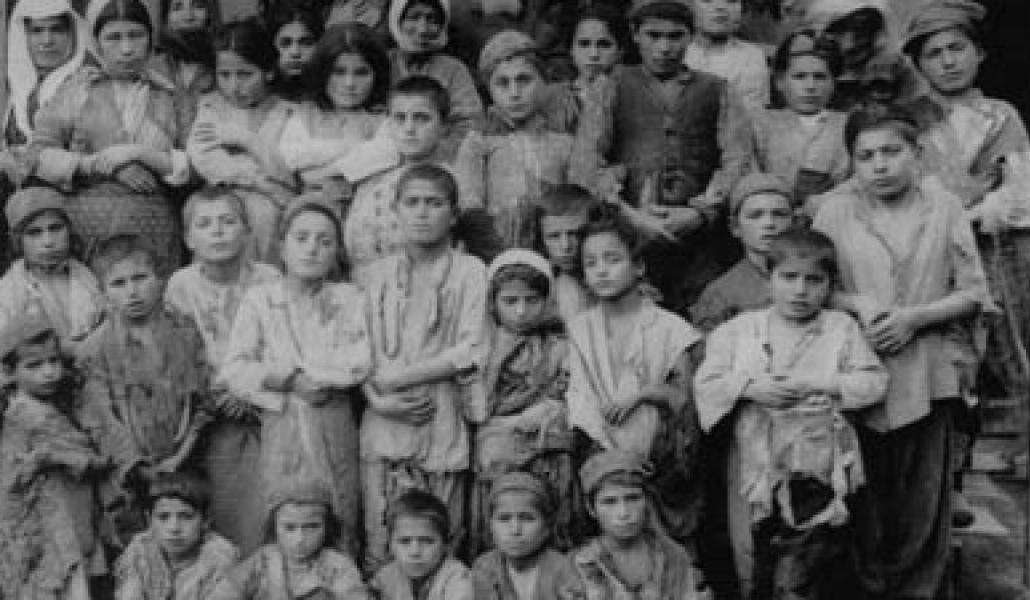
The crime committed against Armenians in 1915, which was correctly formulated as genocide within the framework of international law years later, is one of the most tragic pages in Armenian history.
The 1.5 million Armenians living in Western Armenia fell victim to the Ottoman Empire's plan aimed at eliminating the Armenians. Nearly 800,000 Armenians managed to emigrate, leaving their homes and the homeland behind and taking refuge in Eastern Armenia and different civilized European countries.
As a result of the Turkish government's actions, the Armenian population of Western Armenia, Cilicia and the states of the Ottoman Empire fell victim to massive deportations and elimination between 1892 and 1923. The conditional start of the Armenian Genocide is considered April 24, 1915 when 250 Armenian intellectuals were arrested in Constantinople.
World War I gave the Young Turks the opportunity to settle the issue with the Armenians who were subjects of the empire by implementing the decision that had been taken during a secret assembly held in Salonica in 1911. The authors of the plan were Minister of Internal Affairs Taleat Pasha, Minister of Military Affairs Enver Pasha, Commander of the Palestine Front Jemal Pasha, member of the Young Turks' Central Committee Behaeddin Shakir Bey and others. They wished to solve the Armenian Cause by eliminating Armenians. Their dream, the "Great Turan", was supposed to stretch from Bosphor to Alta, but the Armenians and Armenia were standing in the Young Turks' way. During the years of WWI, the Young Turks organized massacres against the Assyrians, Armenians and Arabs living in the empire. In 1908, the Young Turks implemented a coup d'etat in Turkey supported by some Armenian political parties. However, that was when the ideology of Pan-Turkism was radicalized in Turkish politics. It assumed the unification of all Turkic-speaking nations in one state and the elimination of all nations that were standing in the way. The Young Turks organized the first massacres from April 1 to 14, 1909. The massacres began in the villayet of Adana and took the lives of 30,000 Armenians. After the massacres in Adana, Armenians were further repressed. In October 1911, the Young Turks convened a meeting during which Taleat Pasha, Enver Pasha, Jemal Pasha, Behaeddin Shakir Bey and others took the matter of eliminating Armenians into their own hands.
The Young Turks decided to eliminate the Armenians in three stages. In the first stage, they recruited 15-45-year old Armenian men in the army, disarmed them and massacred 50-100,000 in groups. They also confiscated Armenians' arms and ammunition. In the second stage, they started eliminating Armenian political, cultural and military figures. On April 24, 1915, 250 intellectuals were arrested in Constantinople and that number exceeded 80 on April 29. Siamanto, Grigor Zohrab, Ruben Sevak, Daniel Varuzhan and other progressive thinkers fell victim to the inhumane tortures. In the third stage, the Turks began to massacre women, children and the elderly. They organized a massive deportation, exile and massacres. They either forced them to convert, or killed them or deported them by force. The Armenians who survived in Western Armenia were deported to the deserts of the Mediterranean, mainly Der Dzor where they were killed.
As a result, Armenians lost their homeland spanning 2,00 0 years. In a year, 200,000 Armenians became Muslims and currently live in the valley of Tchorokh River. More than 1,000,000 Armenians migrated and settled in different corners of the globe. There were severe material damages. Based on calculations, 2,3500 churches and monasteries were robbed and destroyed, 1,500 schools and seminaries were eliminated throughout those years. In 1915-16, according to different sources, 1,500,000 Armenians died. But the massacres didn't stop there. During their trip to the Transcaucasus in 1918, the Young Turks massacred 500,000 Armenians and another 260,000 were killed during the massacre perpetrated by the Kemal government. Overall, from 1895 to 1922, over 2,500,000 Armenians were killed.
The events of 1915 and the years that followed are viewed as genocide according to the norms of international law since this was the physical elimination of an entire race at the state level. The Turkish government continues to deny this indeniable fact even after being a member of the Council of Europe for 50 years and considering itself a full-fledged member of the European family and the bearer of European system of values.
The most brilliant evidence of genocide is the Armenian Diaspora the main purpose of which is the recognition of historical truth by all countries. That issue is also considered the primary objective of Armenia's foreign policy.
Every year on April 24, which is the day of commemorating the victims of the Armenian Genocide, hundreds of thousands of Armenians visit the Tsitsernakaberd memorial and lay flowers around the eternal flame.
Like every year, today hundreds of thousands of citizens from provinces, the Diaspora and foreign guests who are aware of that tragic page in Armenian history pay tribute to the victims of the 1915 Armenian Genocide.
Like every year, today 1.5 million flowers will be laid around the eternal flame in memory of the victims, 1.5 million prayers will be said and that many candles will be lit for the souls of the innocent martyrs.