A1+ does not struggle to regain broadcasting license
Nine years ago, on April 2, 2002, A1+ TV Company - a leading television station in Armenia - was controversially pulled off the air after the government refused to renew its broadcast license.
It was on April 2, 2002 that the National Commission of Television and Radio (NCTR) led by NCTR Chairman Grigor Amalyan suspended A1+'s license, labeling the company's contest package as "weak and noncompetitive."
Since 2002, the broadcaster has been unable to get another license despite having participated in more than a dozen tenders for TV and radio frequencies.
In 2008, the European Court of Human Rights made a decision upholding the A1+ claims that its rights had been violated and obliged the Republic of Armenia to pay 30,000 euros to A1+ as compensation for damages and legal expenses.
The compensation has been paid, but the company still remains off the air.
In December 2010, the embattled TV Company was rejected in another frequency tender administered by the state regulator after allegedly submitting fraudulent documents.
A1+ received only two points from the commission compared with 44 points for the company representing ArmNews, a TV station that currently alternates its news programs with half-hourly retransmissions from the pan-European news channel EuroNews.
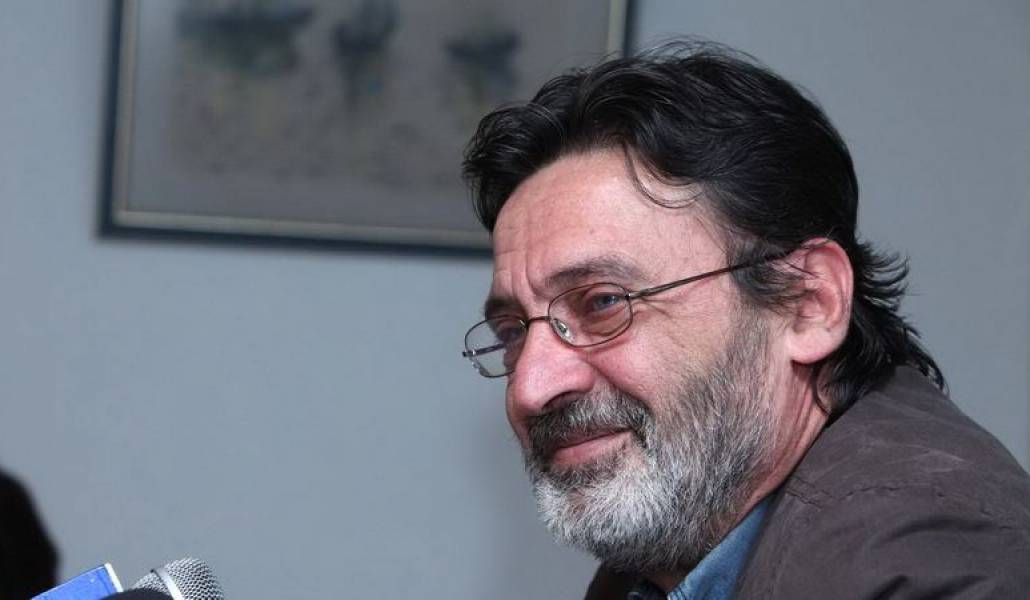
"The recent tender proved that A1+ is a serious contender for Armenian TV companies. A1+ has a professional team ready to work in any condition and at any time," Mesrop Movsesyan, the head of A1+'s founding company Meltex Ltd, said on Friday.
The potential and determination of A1+'s staff frightens all those who cannot reconcile themselves with A1+'s return to the air.
On the one hand, they fear lest the tranquility created in this marsh should be taken to the sphere of television. On the other hand, they scared of the possibility of arousing political unrest. These are unjustified phobias which they try to impose on people and which require urgent treatment. I think that the refusal was politically motivated and it shows the authorities' debility and weakness. They are used to personifying matters," said Movsesyan.
"A1+ does not seek to return to the air which is impossible during the tenure of acting authorities. We are struggling for justice. We want to show that we are not camels and A1+ is a working company. The authorities failed to comply with the European Court's decision and did not provide equal footing for all companies during the tender. We demand that the authorities hold fair and transparent licensing contests in the country. We do not want them to grant us frequency licenses. A+ is still on the air [on the Internet]. The Commission has not yet invented a law that would forbid us to breathe," he said.