FM: "There exists only one course"
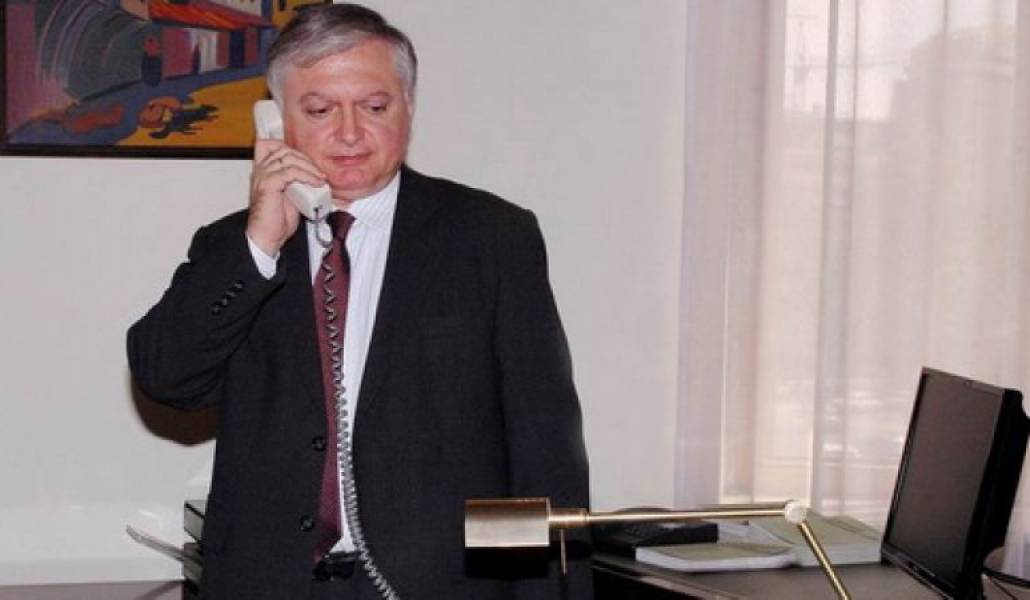
RA Minister of Foreign Affairs Edward Nalbandyan's interview to the "Der Standard" Austrian daily newspaper
"Der Standard": Mr. Minister, despite the political discontent in your country and the Armenian Diaspora, you signed the Protocols in Zurich aimed at normalizing relations between Armenia and Turkey. How discontent are you with Turkey's suspension of the process?
Edward Nalbandyan: Some people, including Europeans, don't trust Turkey. They think Turkey says one thing and does the other. The process of negotiations with Turkey was a long and complicated process full of many obstacles. There have been over ten meetings at the ministerial level. For instance, in Davos I have had 35-hour negotiations with then foreign minister Ali Babacan. We finally reached an agreement and signed the Protocols in the presence of the representatives of Switzerland, the United States, Russia, France, the European Union and the Council of Europe in Zurich in October 2009 and Turkey set forth preconditions for ratification soon after that.
"Der Standard": What do you think happened to Turkey?
E. N.: You should probably ask the Turks. It is likely that nothing happened at all. In any case, it is likely that those who said you can't trust Turkey have an additional argument on their side.
"Der Standard": Did the Turkish side really stand back from the process due to considerations connected to the elections?
E. N.: The Turks are inclined to think that only in Turkey can there be elections and public opinion. We have many more reasons to speak about preconditions.
"Der Standard": Azerbaijan is Turkey's political partner and energy source. How much damage has Azerbaijan caused to the process of normalization of Armenian-Turkish relations?
E. N.: All countries were supporting this process, except for Azerbaijan. I don't think Azerbaijan is right. The normalization of relations could have been useful not only for Armenia and Turkey, but the entire region as well and Azerbaijan is a part of this region.
"Der Standard": How likely is the revival of the Protocols signed in Zurich?
E. N.: There exists only one course and not several. We have signed the Protocols and we must ratify and implement them without any preconditions according to the principle of pacta sunt servanda.
"Der Standard": Will that be likely after the Turkish parliamentary elections in June?
E. N.: The parliamentary elections will be followed by other elections. There can always be a reason to postpone ratification. I think today's Turkish society is more ready to support the normalization on the one hand and is more perceptible toward the past on the other. The launch of negotiations and the signing of the Protocols opened new windows. Last year on April 24, for the first time ever, people gathered in Turkish cities to commemorate the Armenian Genocide and over 30,000 Turkish citizens signed a petition asking for forgiveness from the Armenian people.
"Der Standard": Taking a glance at the frozen Nagorno-Karabakh conflict spanning over 25 years, what kind of danger does the conflict imply for the South Caucasus?
E. N.: The Azerbaijani authorities make belligerent declarations and take the offensive almost every day. In a year alone, they have doubled their military budget and reject the proposals made by the international community to come to terms on no use of force, the strengthening of the ceasefire regime and the dislocation of marksmen from the line of contact. I don't think anyone could say that the Azerbaijani authorities' line of conduct does not imply danger.
"Der Standard": But should you take those belligerent declarations seriously, or are they simply made for domestic threat in Azerbaijan?
E. N.: The threat to use force is a violation of international law and not giving an adequate response to that belligerence may have serious consequences.
"Der Standard": How much of a source of instability is an authoritarian regime and an underdeveloped civil society in the region?
E. N.: We need to be more precautious when it comes to comparing the social and political developments in the countries of the region. While Armenia is taking steps toward developing democracy, Azerbaijan is taking steps toward developing authoritarianism. The majority of international organizations and many experts share this view. In Armenia, presses and the civil society are actively engaged in political discourse, but this is something that has never been heard of in Azerbaijan. To the contrary, the propaganda instilling hatred toward the Armenians that receives the government's full support impedes the process of establishing peace and poisoning the brains of the young generation with that impedes the resolution of the conflict in the future. In general, the spirit of concession and peaceful dialogue is less likely in authoritarian countries.
"Der Standard": Now, after a couple of months have passed, have you come to grips with the idea that Austria opened its only embassy in the region in Baku and not in Yerevan or Tbilisi?
E. N.: Would you believe me if I said I am very happy for that? No, I am not. Armenia opened its embassy in Vienna many years ago and it was one of Armenia's first embassies after independence. I think it is time for Austria to act in the same way and open a representation in Yerevan. Our goal is to have our relations reach a higher level.
"Der Standard": Austria's former foreign minister Urusla Plasnik is running for OSCE Secretary General. Will Armenia endorse Plasnik?
E. N.: Armenia still hasn't made a decision regarding the candidates, but as far as Turkey's candidate is concerned, we have said that we can't support the candidate since Turkey's representatives in different international organizations are different with their subjective approaches and don't miss out on any opportunity to go against Armenia's positions.
"Der Standard": Does this mean that Armenia will vote for other candidates and Mrs. Plasnik?
E. N.: This means that Armenia may endorse one of the other candidates.
"Der Standard": Will you shorten the list?
E. N.: We will do so very soon.