Ara Papian: "Ninety Years of Delusion"
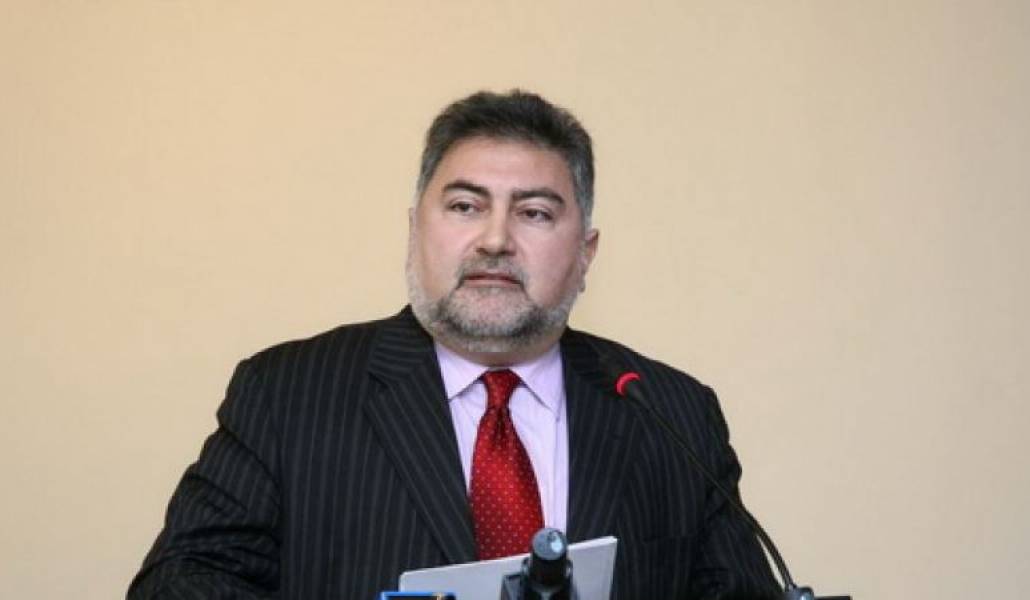
On December 2, 1920, Armenia and Turkey signed the Treaty of Alexandropol. Head of the Modus Vivendi Centre Ara Papian has issued a statement on the occasion of the ninetieth anniversary of the Treaty.
"During these days ninety years ago, the Armenians and Turks were carrying out negotiations in the ill-fated city of Alexandropol (now Gyumri), perhaps the most difficult negotiations in Armenia's brief political history. The negotiations ended with the signing of that most burdensome Treaty of Alexandropol, on the 3rd of December, 1920," he said drawing parallels between the current and past events.
"We are continually rejecting the lessons of history and directing ourselves with the delusion of perceiving what is desirable instead of what is real. If this were not the case, then we would not have signed the humiliating Armenia-Turkey protocols in Zurich, protocols which provided a temporary sense of relief, but which remained fruitless and barren, thereby rendering themselves exemplars of political onanism.
Of course, the signing of the Treaty of Alexandropol was not some isolated incident. It was a consequence, in particular, of the military and political situation in Armenia after the havoc caused by the May, 1920 uprising, the ever-increasing Bolshevik-Kemalist co-operation, as well as the immense gap that had been formed between the authorities of Armenia and the people. As the current state of Armenia mirrors the Armenia of May-November, 1920 in many ways, I thought it helpful to discuss certain key points.
One question has always bothered me, as I am sure, it has others. How did it come to pass that, in almost the absence of an army, the Armenian people managed to defeat or at least provide an adequate defence to the Ottoman forces in open battle in May of 1918, and just two and a half years later, in September-November, 1920, with more weapons, ammunitions and soldiers than in 1918, it suffered ignominious defeat at the hands of the remnants of the very same Ottoman army in the well-bastioned fortress of Kars?
Yes, costly mistakes were allowed in organising the defence; yes, there were many unfavourable circumstances, even accidental ones. And, what, were there none in May of 1918? Of course there were! But in May of 1918, the Armenian man and soldier was certain that the Ottoman army was advancing towards the southern Caucasus to finish what it had started with the Armenian Genocide. Therefore, there were no alternatives to facing and struggling against the enemy; the willingness to fight was borne by the entire people.
And also, the real reason for the victory of the first battle over Artsakh (Karabakh) was its own characteristic of being national, aimed at liberation and the fact that its essence was shared among the people. But when one casts a glance at the circumstances in September-November, 1920, then it becomes clear that the Armenian soldier had simply given up on fighting, and the Armenian man, on showcasing any resistance. The most revealing testimony to that fact are the Turkish casualties.
According to Kazim Karabekir, commander of the eastern front of the Kemalist forces, in the course of three days of battle (from the 31st of October to the 2nd of November, 1920), including the taking of Kars, the Turks lost only nine and had 42 wounded. This served as a realisation of the Bolshevik calls of "the times have changed", "these are different Turks". And upon the withdrawal of "the Turks new and made anew", the local authorities had to bury 4,386 bodies - 90% of which were women and children - in but three villages of Shirak (Ghaltaghchi, Aghboulagh and Barapol, as they were then called).
This, too, was a manifestation of the policy of brotherhood towards "the new and made anew" Turks. Most unfortunately, it is the same song being sung today, the same old story; only the Bolsheviks getting assistance from abroad have been replaced by numerous grant-gulping organisations and so-called political scientists," reads the letter.