Way to prison through slaughterhouse
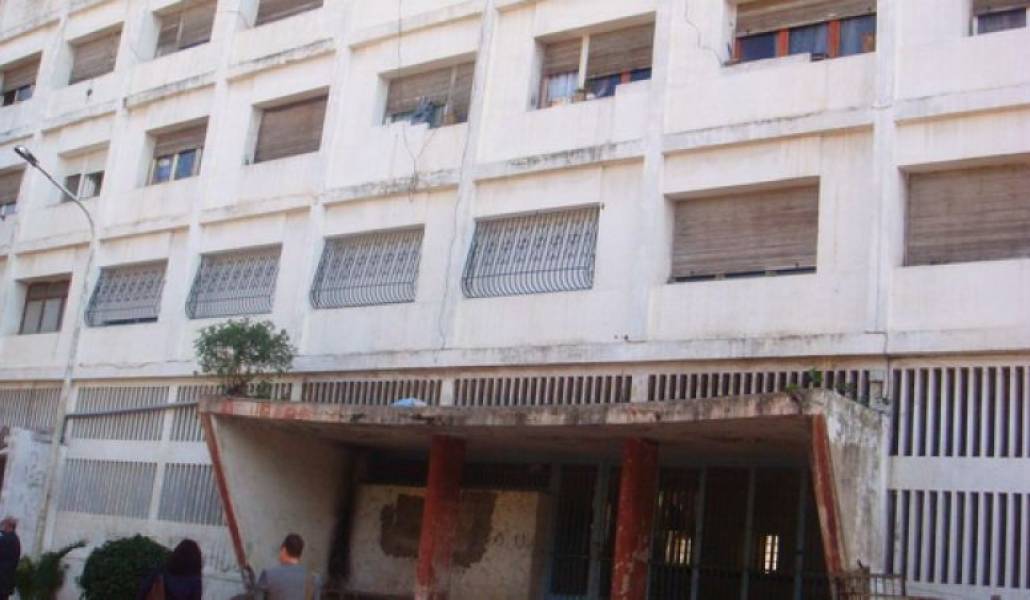
Casablanca's former slaughterhouse, which has turned into a unique culture house, awakens the most severe memories among Morocco's former political prisoners.
Ten years ago, the slaughterhouse was the only path in the neighbourhood that led to the jailhouse.
"Spending a night here, listening to the sounds of slaughtered animals and witnessing those violent scenes were graver than staying in prison," says former political prisoner Nourdine Khamali. Prisoners were brought to the slaughterhouse, pressurized and made to confess that they had harmed the country's security.
Specialist of foreign languages Nourdine Khamali, 56, is one of the thousands of victims of the "regime." Khamali twice appeared behind bars: first in 1977 when he was still a student and then in 1985 when was working in school. Nourdine Khamali, told us that he was first tried for his affiliation with a trade union while the second imprisonment was ungrounded.
"If we were allowed to go inside the prison, I would show you the cell I was kept in," he told us near Casablanca's Derb Moulay Cherif (Hay Mohammedi) Prison adding that the wing of tortures was on the left side.
Mr. Khamali did not want to recall the tortures.
"Are you ready to hear my story?" he asked a rhetorical question saying that all possible means including beating, electric shock, were used to extort evidence from inmates. Frequently, family members were tormented before the dissident prisoner in order to make him give false testimony. Prisoners had their eyes tied throughout the confinement.
Armenian, Georgian and Azerbaijani journalists who were attending the seminar "ENP and Neighbourhood Security: Developments in Morocco" last week were not allowed to enter the prison.
Though the prison has turned into a dwelling house, visitors need a special permit.
Today, former political prisoners and their descendants live in the district of Hay Mohammedi. The primary task of lcal public organizations is to provide former political prisoners' integration into the country's socio-economic life. For years, these people were considered to be "dangerous" for public. NGOs want to make the prison a museum of memories.
"History and memory are two different notions," said former political prisoner Fatna Elbui, a representative of Association of Civil Initiatives.
According to Mrs. Elbui, the state records its history while people store memories.
"There are no political prisoners in Morocco," said Abderezak Ruban, a former political prisoner and representative of Advisory Council on Human Rights (CCDH)
All those who are seemingly arrested on political motivations are in fact members of terrorist groups.
In its report "Morocco: Stop Looking for Your Son Human Rights Watch international organization criticizes Morocco's leadership saying people charged with terrorism were tried with rough breaches of law.
The last amnesty was granted by King Mohammed VI of Morocco in 1995. After three coup attempts, thousands of people were exiled, taken under custody or declared missing.
CCDH has a special body dealing with the issues of political prisoners.
There are officially 18,000 former political prisoners in the country. 6,385 of them have received compensation.
Ex political prisoner Mbarek Afekown has received €9000 as compensation but he says it is not enough to compensate the tortures and moral damages he received in jail.
Nourdine Khamali did not even apply for compensation, as he did not agree with the conditions proposed by the state.
CCEDH representative Abderezak Ruban notes that the changes the country has today were unimaginable twenty years ago. He says the changes were due to the European Union and Mohammed VI.
"No one could close the page of the history but for King Mohammed VI," he noted.
Lawyer Mohamed Sebar says the changes are undoubtedly great in the country. Yet, he protests against the regime.
By the constitution, the king is a "holy person" who cannot be dishonored. As a rule, people defaming the king are either imprisoned or fired from work.
We happened to see a rally in Rabat with the participation of university graduates who wanted to work on equal footing. Police followed the procession without interference.
Karine Asatryan
Rabat-Casablanca