Dink “won”
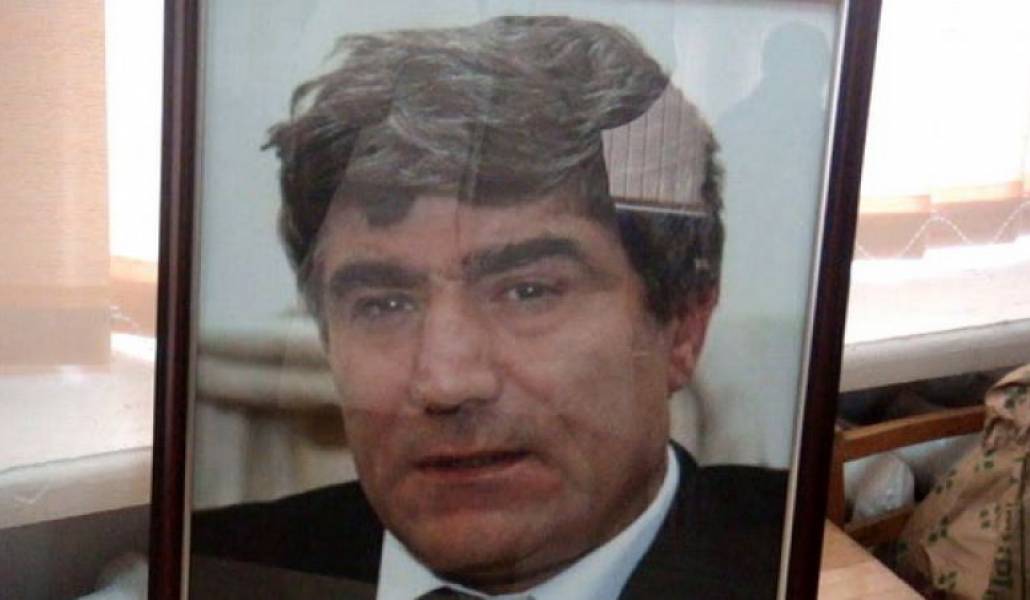
The European Court of Human Rights has ruled against Turkey by acknowledging the country guilty for the murder of Hrant Dink. The court considers that there are violations of the rights to life and freedom of expression.
As compensation, the Turkish government must pay Dink's family over 130,000 euros and over 28,000 euros for judicial expenses.
Hrant Dink was assassinated on 19 January 2007.
Please read the court's ruling on our English site.
Press release issued by the Registrar
Chamber judgment
Not final1
Dink v. Turkey (applications no. 2668/07, 6102/08, 30079/08, 7072/09 and 7124/09)
THE AUTHORITIES FAILED IN THEIR DUTY TO PROTECT THE LIFE AND FREEDOM OF EXPRESSION OF THE JOURNALIST FIRAT (HRANT) DINK
Unanimously:
Two violations of Article 2 (right to life - lack of an effective investigation),
violation of Article 10 (freedom of expression) and
violation of Article 13 (right to an effective remedy) in conjunction with Article 2
of the European Convention on Human Rights
Principal facts
The applicants are six Turkish nationals: Fırat Dink, who was known under the pen name of Hrant Dink, his wife (Rahil Dink), his brother (Hasrof Dink) and Fırat and Rahil Dink's three children (Delal Dink, Arat Dink and Sera Dink). Fırat Dink was born in 1954 and was assassinated on 19 January 2007. The remaining applicants were born in 1959, 1957, 1978, 1979 and 1986 respectively and live in Istanbul. Fırat Dink, a Turkish journalist of Armenian origin, was publication director and editor-in-chief of Agos, a bilingual Turkish-Armenian weekly newspaper published in Istanbul since 1996.
Between November 2003 and February 2004 Fırat Dink published eight articles in Agos in which he expressed his views on the identity of Turkish citizens of Armenian origin. In particular, in the sixth and seventh articles of the series, he wrote that Armenians' obsession with having their status as victims of genocide recognised had become their raison d'être, that this need on their part was treated with indifference by Turkish people and that this explained why the traumas suffered by the Armenians remained a live issue. In his view, the Turkish element in Armenian identity was both a poison and an antidote. He added that Armenian identity could come to terms with its Turkish component in one of two ways. Either Turkish people could display empathy towards Armenians - something that would be difficult to achieve in the short term - or the Armenians could come to terms with the Turkish element by characterising the events of 1915 in a manner independent of the characterisation accepted by the world at large and by Turkish people. In the eighth article Mr Dink, pursuing the line of argument begun in the rest of the series, wrote that "the purified blood that will replace the blood poisoned by the ‘Turk' can be found in the noble vein linking Armenians to Armenia, provided that the former are aware of it." Mr Dink was of the view that the Armenian authorities should make more active efforts to strengthen ties with the country's diaspora, as a basis for a healthier national identity. He published a further article in which he referred to the Armenian origins of Atatürk's adoptive daughter. Extreme nationalist groups responded to the articles by staging demonstrations and writing threatening letters.
In February 2004 a nationalist extremist lodged a criminal complaint against Fırat Dink, alleging that the latter had insulted Turkish people with his use of the phrase "the purified blood that will replace the blood poisoned by the ‘Turk' can be found in the noble vein linking Armenians to Armenia". In April 2004 the Şişli (Istanbul) public prosecutor's office instituted criminal proceedings against Fırat Dink under the article of the Turkish Criminal Code which made it an offence to denigrate "Turkishness" (Türklük) (Turkish identity). In May 2005 an expert report concluded that Fırat Dink's remarks had not insulted or denigrated anyone, since what he had described as "poison" was not Turkish blood, but rather Armenians' obsession with securing recognition that the events of 1915 amounted to genocide. In October 2005 the Şişli Criminal Court found Mr Dink guilty of denigrating Turkish identity and sentenced him to six months' imprisonment, suspended. The court held that the public could not be expected to read the whole series of articles in order to grasp the real meaning of his remarks. On 1 May 2006 the Court of Cassation (Ninth Criminal Division) upheld the guilty verdict. On 6 June 2006 Principal State Counsel at the Court of Cassation lodged an extraordinary appeal on points of law, arguing that Mr Dink's remarks had been incorrectly construed and that his freedom of expression should be protected. On 11 July 2006 the appeal was dismissed by the Court of Cassation sitting as a full criminal court. On 12 March 2007 the Criminal Court to which the case had been remitted discontinued the proceedings on account of the death of Fırat Dink.
On 19 January 2007 Fırat Dink was killed by three bullets to the head. The suspected perpetrator was arrested in Samsun (Turkey). In April 2007 the Istanbul public prosecutor's office instituted criminal proceedings against 18 accused. The proceedings are still pending.
In February 2007 investigators from the Ministry of the Interior and the gendarmerie opened an investigation in order to ascertain whether the Trabzon gendarmerie had been negligent or had failed in their duty to prevent the killing, given that an informant claimed to have warned two non-commissioned officers (NCOs) of the gendarmerie about the intended crime. The gendarmes denied having been informed about the preparations for the killing. The Trabzon provincial governor's office authorised the institution of criminal proceedings against the two NCOs but not against their superior officers. The NCOs eventually admitted that an informant had warned them of a possible killing; they claimed to have passed on all the details to their superior officers, who had been responsible for acting on the information received. The NCOs further stated that they had been ordered by their superior officers during the investigation to deny having received the information. The proceedings in question are still in progress.
The Istanbul public prosecutor's office also requested the Trabzon public prosecutor to start proceedings against the police authorities in Trabzon, on the ground that one of the accused, who was an informant of the Trabzon police, had also provided the latter with information on the preparations for the killing. The Trabzon police authorities had made no attempt to thwart these plans but had confined themselves to officially informing the Istanbul police of the likelihood of an assassination attempt. The Istanbul public prosecutor added that one of the Trabzon police chiefs had openly voiced extreme nationalist views and supported the accused. On 10 January 2008 the Trabzon prosecuting authorities decided to take no further action against the Trabzon police, noting in particular that the accusations made by the Istanbul public prosecutor had been based on a statement by one of the accused which had later been retracted. The prosecuting authorities were persuaded by the argument that the Trabzon police had not judged the information received to be credible. Finally, they stressed that the police chief suspected of supporting the defendants' actions had denied the accusations against him. An objection lodged by the applicants against the decision to take no further action was dismissed.
The investigation by the Istanbul public prosecutor's office confirmed that on 17 February 2006 the Trabzon police had officially informed the Istanbul police of the likelihood that Fırat Dink would be assassinated and had identified the suspects. The Istanbul police had not acted upon this information. Following the conclusions of three investigations into this failure to act, the management board of the Istanbul provincial governor's office decided to bring criminal proceedings for negligence against certain members of the Istanbul police authorities. However, the Istanbul Regional Administrative Court of Appeal set aside the corresponding orders on the ground that the investigation had been inadequate.
Finally, following a complaint by the applicants, a criminal investigation was opened concerning members of the Samsun police and gendarmerie on charges of defending the crime. While the suspected perpetrator was in police custody the persons concerned had had their photograph taken with the suspect, who was seen holding a Turkish flag: on the wall behind them were the words "Our country is sacred - its future cannot be left to chance". In June 2007 the Samsun public prosecutor's office decided to discontinue the proceedings against the officers in question, taking the view that defending a crime was only an offence if it was done in public. However, disciplinary action was taken against the officers.
Complaints, procedure and composition of the Court
Relying in particular on Article 2, the applicants other than Fırat Dink complained that the State had failed in its obligation to protect the life of Fırat Dink. Under the same provision, they alleged that the criminal proceedings brought against the State agents concerned for failing to protect the journalist's life had been ineffective. On the latter point they also relied on Article 13. Under Article 10 in particular, they further alleged that the fact that Fırat Dink had been found guilty of denigrating Turkish identity had infringed his freedom of expression and made him a target for nationalist extremists.
The first application was lodged with the European Court of Human Rights on 11 January 2007 by Fırat Dink. The remaining applications were lodged on 18 December 2007 and 21 May, 27 November and 22 December 2008 respectively by Rahil, Delal, Arat and Sera Dink following the first applicant's death. In application no. 7072/09, Hasrof Dink is also an applicant.
Judgment was given by a Chamber of seven judges, composed as follows:
Françoise Tulkens (Belgium), President,
Ireneu Cabral Barreto (Portugal),
Dragoljub Popović (Serbia),
András Sajó (Hungary),
Nona Tsotsoria (Georgia),
Işıl Karakaş (Turkey),
Guido Raimondi (Italy), judges,