“The agreement excludes the possibility of a new war”
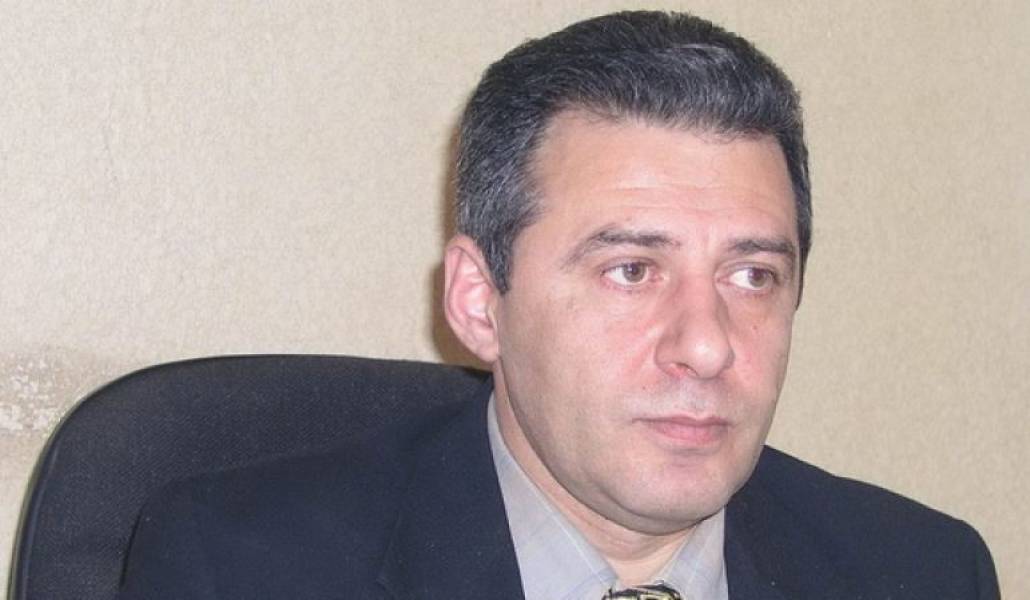
"Within the framework of the OSCE, Azerbaijan, Armenia, Georgia and Russia signed an agreement on the reduction of ordinary armament in 1992. The agreement determined the quota of simple weapons, as well as military equipment - military aircrafts, tanks to be set up in the South Caucasus. Currently, our military specialists, as well as OSCE officials engaged in this issue count the quota whether it has been disturbed or not. We think that the recent agreement between Moscow and Yerevan violates the provisions of the aforesaid agreement," chief of the public policy department of Azerbaijan's presidential administration Ali Hasanov said commenting on the Armenian-Russian agreement signed last week.
Armenia's ex Defense Minister Vagharshak Harutyunyan who headed the military delegation of the working group elaborating the agreement on the Russian military base deployment in Armenia in 1992 said, "The agreement on ordinary armament was signed during a CIS summit. It was a multipartite agreement signed between Azerbaijan, Armenia, Georgia, Russia, Ukraine and Moldova. It was the continuation of the Agreement on ordinary armed forces in Europe, a Viennese document restricting five types of armament and determining quotas for military aircrafts and tanks. This agreement is fully compliant with that of 1992."
Vagharshak Harutyunyan noted that the changes mainly refer to the terms of deployment of Russian military base in Armenia and its functions. Besides, the protection of the Armenian-Azerbaijani and Armenian-Georgian borders has been strengthened.
Article 3 of the agreement signed between Armenia and Russia in 1995 envisages that the Russian military base protects the interests of Russia and Armenia in line with a joint plan on armed forces. The latter covered only outer borders -Turkey and Iran. Georgia and Azerbaijan were not involved as they were not CIS members. Under CIS agreements, CIS member states cannot act against each other; hence no provision on the issue was included in the agreement. Today, the restriction is removed and the Russian military base guarantees RA security across the frontline.
The agreement also suggests that Russian should provide Armenia with modern weapons. Thus, Russia guarantees military equilibrium between Armenia and Azerbaijan.
This will undoubtedly change the direction of the armament race shifting it from the Armenian-Azerbaijani platform to an Azerbaijani-Russian one. The agreement excludes the possibility of an Armenian-Azerbaijani war.
Regarding Hasanov's statement that Armenia disturbs the admissible quota, Mr. Harutyunyan said it is Azerbaijan that breaks the agreement: the figures are available in the UN register and were frequently voiced by NATO representatives.