Promised and opened a Turkish store
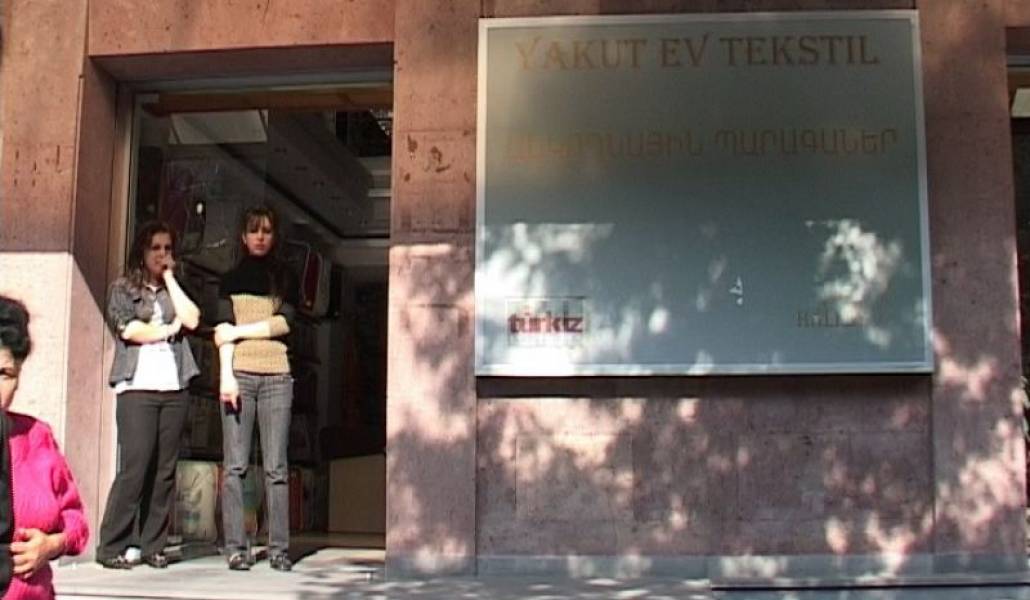
While the Turkey-Armenia Protocols are in the phase of ratification, a specialized Turkish products store has opened in Yerevan with signs reading "Bed Accessories" in Turkish and Armenian.
The correspondent of the State Language Inspectorate, Mariam Alexanyan, was at the store while "A1+" was shooting a clip. Alexanyan gave the store administration a warning for the sign that goes against the law on "Language" and demanded to take it off. The sign in Turkish was larger than that in Armenian.
Correspondents of the Shengavit district council also came to the store. They first tried to stand in our way and then left without stating why they had come.
"They [the district council] gave us permission. What do they want from us now? They told us to pay for the sign and we did," the store owner said.
The store owners were the Manukyans, two sisters with roots tracing back to Mush. They moved to Yerevan after the earthquake in Gyumri.
"We don't mix business and politics. We are doing trade without preconditions, like Serzh Sargsyan said. We are working women and have decided to bring products from Turkey," Luisa Manukyan says. "We agreed with Turkish businessmen to bring their products, open a textile store and sell the products at suitable prices. We explained to the Turkish businessmen and the factory director that the prices must be suitable for our people."
Luisa Manukyan and her sister told "A1+" that they forget neither the Genocide nor the issue of Nagorno-Karabakh.
However, "we are living in the 21st century, we are a civilized nation and we are moving toward the Council of Europe," Luisa Manukyan says.
Why don't you bring European products? In response, Manukyan said:
"If we have the opportunity, we will." Then she "threatened" that she would bring products from Germany. "In that case, we will bring products from Germany too and see if people still complain," she said.
The store has been open since November 1 as the owners had promised the Turkish businessmen, but there is no trade due to lack of receipts.