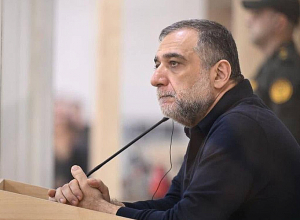
U.S. Department of State report:setback in Armenia
There were significant setbacks for democracy in Armenia in 2008, as stated in the annual report of the U.S. Department of State. The reason for such a negative evaluation was the violent clashes that took place after the February 19 presidential elections. The authors of the report underline:
There were significant setbacks for democracy in Armenia, including the worst post-election violence seen in the Caucasus in recent years. After weeks of generally peaceful protests following a disputed February presidential election, the government used force to disperse protestors on March 1-2, which resulted in violent clashes and 10 deaths. The violence ushered in a 20-day state of emergency and a blackout of independent media during which the government severely curtailed civil liberties. During the remainder of the year, there were significant restrictions on the right to assemble peacefully or express political opinions freely without risk of retaliation, and several opposition sympathizers were convicted and imprisoned with disproportionately harsh sentences for seemingly political reasons. Fifty-nine opposition sympathizers reportedly remained imprisoned on seemingly political grounds at year's end; no government officials were prosecuted for their alleged role in election-related crimes. Despite the mixed success of a politically-balanced fact-finding group established by the government to investigate the March events, the climate for democracy was further chilled by harassment, intimidation, and intrusive tax inspections against independent media and civil society activists.
The authors of the report touched upon the mass media in Armenia, as well as the difficulties imposed on presses and journalists.
Censorship was imposed and freedom of press and media were severely restricted during the March 1-21 state of emergency. According to the decree enacting the state of emergency, "reports in the mass media on issues concerning the internal situation and of state importance are restricted to official information provided by state entities." The decree resulted in the closing of all opposition media, all Web sites critical of the government, and several days of broadcasts of Radio Liberty. It did not, however, prevent other print and broadcast media from airing strident criticism and unfounded charges against the political opposition and its leaders. H1 was identified by the country's human rights defender as "a most vivid example of such unacceptable coverage." While the state of emergency decree applied only to Yerevan, there were numerous reports of the severe media restrictions being imposed in many other parts of the country.
The authors also state:
A1 Plus television still remained without a broadcasting license or frequency at year's end. The station has unsuccessfully filed 10 applications for a television or radio license after the government failed to renew its frequency use license in 2002, an action that many considered to be politically motivated. Since 2002, A1 Plus has operated as an Internet news agency, posting its video footage to the Web. During and after the state of emergency, A1 Plus-produced news footage appeared on a variety of international amateur video Web sites. On June 17, the ECHR ruled that authorities had violated Article 10 (freedom of expression) of the European Convention on Human Rights by failing to give a written explanation for refusing a broadcast license to A1 Plus. The ECHR's decision stated that "a procedure which did not require a licensing body to justify its decisions did not provide adequate protection against arbitrary interference by a public authority with the fundamental right to freedom of expression." The ECHR awarded, and the government paid, 30,000 euros (approximately $42,000) to A1 Plus' parent company, Meltex, Ltd. On September 10, with essentially no prior notification or public discussion, the National Assembly amended the Law on Television and Radio to impose a moratorium until July 2010 on the issuance of new television broadcasting licenses. The amendment was passed in an unannounced, evening extraordinary session. The moratorium was enacted shortly before a call for bids on several television frequencies that were due to become available based on expiring licenses. The amendment also gives existing stations the right to extend their licenses to January 2011. Independent media, media analysts, and NGOs viewed the measure as an effort to block issuance of a license to A1 Plus or other applicants more sympathetic to the political opposition than current license holders. On September 19, the OSCE's representative on freedom of the media sent a letter to President Sargsian warning that the new law "may make Armenia unable to comply" with the ECHR decision in the A1 Plus case.
In the nearly 54-page report, it is stated:
Ethnic Armenian separatists, with Armenia's support, continued to control most of the Nagorno-Karabakh region of the country and seven surrounding Azerbaijani territories.
The same sentence appears in the State Department's report on Azerbaijan. In addition, it is stated that:
The government did not exercise any control over developments in those territories.