PACE WILL ANALYSE MEDIA REFORM AND ITS IMPLICATION ON MEDIA PLURALISM
Support A1+!
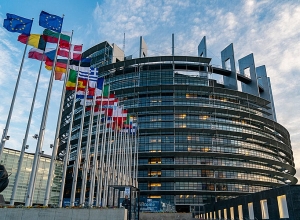
“However, we would like to stress that the technical implications of the introduction of digital broadcasting should not be used as a pretext to delay unduly the holding of an open, fair and transparent licensing tender, as requested by the Assembly,” holds the report Georges Colombier (France) and John Prescott (United Kingdom), the co-rapporteurs of the Parliamentary Assembly of the Council of Europe (PACE) on the monitoring of Armenia’s obligations and commitments.
The draft resolution on the implementation by Armenia of Assembly Resolutions 1609 (2008) and 1620 (2008) is already put into circulation.
Georges Colombier and John Prescott, have drafted a 12-page document on Armenia. The draft document refers to the recommendations of Resolutions 1609 and 1620 and their implementation.
Special reference is made to the establishment, by Presidential decree, of an expert fact-finding group to inquire into the events of March 1 and 2, 2008, as well as to diversity of media environment, amendments and freedom of assemblies.
Below is an extract from the docuemnt
iii. Media reform and pluralist media environment
44. In Resolution 1609 (2008), the Assembly considered that the independence from any political interest of both the National Television and Radio Commission and the Public Television and Radio Council must be guaranteed. In addition, the composition of these bodies should be revised in order to ensure that they are truly representative of the Armenian society.
45. In addition, in Resolution 1620 (2008), the Assembly recalled that there is a need for a pluralistic media environment in Armenia and, referring to the Strasbourg Court judgment concerning the denial of a broadcasting licence to the A1+ channel, called upon the authorities to now ensure an open, fair and transparent licensing procedure, in line with the Guidelines adopted by the Committee of Ministers of the Council of Europe, on 26 March 2008, and with the case law of the Court.
46. As mentioned in our previous report (Doc. 11656 (2008)), a public hearing was organised by the National Assembly of Armenia on the issue of media reform, with the participation of representatives of the authorities, NGOs and opposition. This public hearing resulted in a legislative package that was sent to the Council of Europe for opinion, as well as to the establishment of a parliamentary working group on the reform of the Law on Television and Radio.
47. Part of the legislative package concerns the implementation of an open and transparent tender procedure for the composition of the National Television and Radio Council and for the composition of the Public Television and Radio Commission. This tender procedure aims at ensuring the independence of the members and, as a result, the work of these two bodies. The preliminary opinion of the Council of Europe experts with regard to this new tender process is generally positive.
As noted in previous reports, the lack of independence of these two main regulatory bodies for the media raises concerns about possible government influence over the media that are regulated by them. We therefore welcome the efforts of the authorities in this respect. However, we note that the proposed amendments do not explicitly stipulate that the two regulatory bodies should be representative and reflect a broad cross-section of the Armenian society. We would therefore recommend that further amendments are made to the Law on TV in this respect.
48. On 9 September 2008, the National Assembly adopted an amendment to the Law on Television and Radio that cancels all tenders for broadcasting frequencies until 2010, when the introduction of digital broadcasting in Armenia will have been completed. The amendment extends the validity of all current licenses until January 2010. While the government argues that the adoption of these amendments was needed to address the technical requirements related to the introduction of digital broadcasting, the opposition has decried these amendments as an attempt to avoid the organisation of an open, fair and transparent licensing procedure, as demanded by the Assembly, so as to keep A1+ off the air.
49. We take note of the ongoing discussions between the authorities, the National Assembly, and Council of Europe experts with regard to the proposed legislative reform package, as well as the already adopted amendments to the Law on Television and Radio that cancel tenders for broadcasting licenses until 2010. We understand that the Council of Europe will provide an expert opinion on the revised amendments to the Law on Television and Radio and is ready to provide a “spectrum expert” to analyse the technical implications of the introduction of digital broadcasting. In addition, the amendments to the Law on Television and Radio with regard to the cancellation of tenders for broadcasting licences was also discussed by the Committee of Ministers in December 2008, in the context of the discussion on the execution by Armenia of the above-mentioned judgment of the Court in the case of A1+.
50. We do not wish to pre-empt the ongoing co-operation and discussions on these issues between the Armenian authorities and the relevant Council of Europe departments. We therefore intend to analyse in extenso the media reform and its implications on the pluralism of the media environment in our next report on Armenia in the framework of the regular ongoing monitoring procedure of the Assembly. However, we would like to stress that the technical implications of the introduction of digital broadcasting should not be used as a pretext to delay unduly the holding of an open, fair and transparent licensing tender, as requested by the Assembly.