To Khosrov reserve by traces of leopard (video)
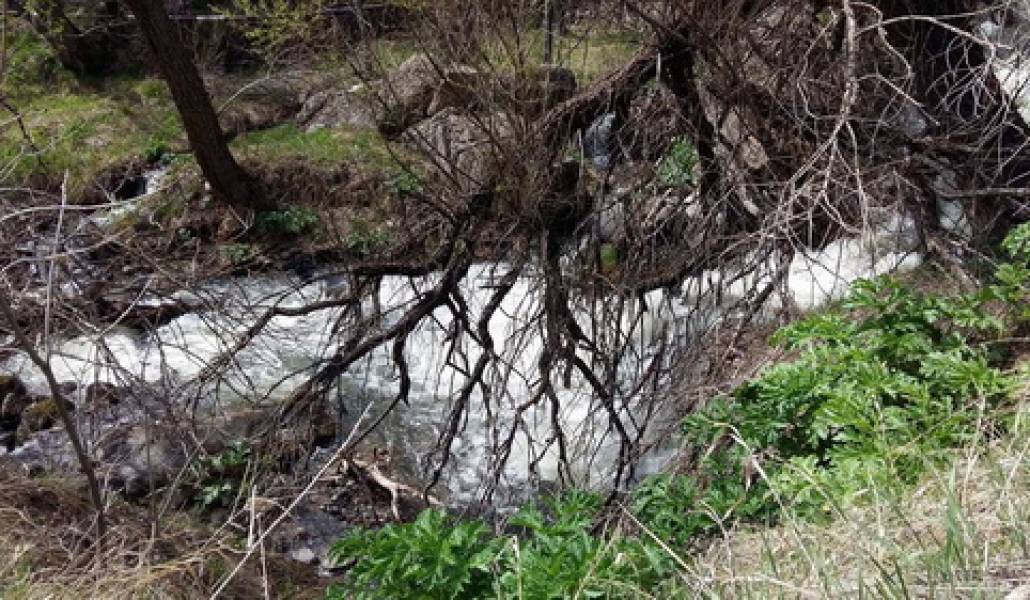
Neither mobile connection, nor TV, radio, internet; it is Khosrov Forest State Reserve. This territory of 29196 ha was established in 1958 in Ararat marz in the basins of Azat and Vedi rivers, at 900-2400 meters above sea level for the preservation of unique animals and plants.
According to Movses Khorenatsi, by the order of Khosrov II King (330-338) “Khosrovakert” forest was established in this territory (from here the name reserve) and was inhabited with hunting animals and birds.
1849 out of 3500 types of plants growing in Caucasus grow in this territory; more than 80 species have been registered in Red book.
During this season mainly primula has grown; they smell sweet.
 In the reserve the fauna includes 9 species of fish, 30 species of reptiles, 142 species of birds and 50 species of mammals. In the forests of the reserve there are grey bear, hedgehog, wolf, rabbit, mouflon, Bezoar goat and Caucasus leopard, which traces we followed on April 30. World Wildlife Fund (WWF Armenia) “Conservation of leopard in the South Caucasus” program organized “By traces of leopard” information expedition.

 Alexander Malkhasyan, expert of Armenian branch of World Wildlife Fund, operates GPRS system, in order to orientate in the location.
 We are moving forward to observe the traces of animals and encounter the traces of wild pig…and…bear’s waste.

 People’s traces
 The principles of monitoring carried out by photo-trap are presented
 Arsen Gasparyan, coordinator of “Conservation of leopard in the South Caucasus” program of World Wildlife Fund, notes that Khosrov Forest State Reserve is one of settlements of leopard.
These animals are “misanthrope”. There are employees in the reserve, who haven’t met a single leopard in 15 years, but photo-traps capture them from time to time.
Arsen Gasparyan, coordinator of “Conservation of leopard in the South Caucasus” program of World Wildlife Fund, notes that Khosrov Forest State Reserve is one of settlements of leopard.
These animals are “misanthrope”. There are employees in the reserve, who haven’t met a single leopard in 15 years, but photo-traps capture them from time to time.
 In general there are more leopards in Iran, and Armenia-Iran, Armenia-Nakhijevan raods are the main route for leopards. On the border, though, there are lots of problems, and there is much to do for it for making frontier mined territories safe for them.
In the south of Armenia four new reserves have been established- “Arevik” national park, “Zangezur” and “Khustup” state reserves and “Gnishik” preserved landscape, which include the main habitats for leopards. Their total territory is 73229 ha, which makes up 2.5 percent of the territory of the republic.
In general there are more leopards in Iran, and Armenia-Iran, Armenia-Nakhijevan raods are the main route for leopards. On the border, though, there are lots of problems, and there is much to do for it for making frontier mined territories safe for them.
In the south of Armenia four new reserves have been established- “Arevik” national park, “Zangezur” and “Khustup” state reserves and “Gnishik” preserved landscape, which include the main habitats for leopards. Their total territory is 73229 ha, which makes up 2.5 percent of the territory of the republic.
 Khosrov Forest State Reserve has problems with mapping. Gilan and Gyolasor settlements, which aren’t formulated as communities, nevertheless have residents, which birthplace in their passports is Gilan (30 families) and Gyolasor (with 10 Assyrian families). According to the experts, the settlements put the reserve at risk from the point of view of animals’ migration and poaching. But the state still cannot find a solution to the issue of compensation to these people’s settlements and their transfer to another place.
 Journalists got acquainted with visitors’ center and eco tourism services.
The center can host dozens of guests; all the living conditions are available.
Journalists got acquainted with visitors’ center and eco tourism services.
The center can host dozens of guests; all the living conditions are available.
 The territory of the visitors’ center is kept by Bugati.
 In the evening the journalists were able to see Bezoar goats climbing in the rocks.
 Wild almond tree
 At the end of the expedition only the journalists were captured by the photo-trap
 Andranik was coming back home with us. He works at the reserve for 7 days and nights, then he returns to his house in the neighboring village. The working days are the most peaceful- cut off from all the problems and news, “Now when I go home, everybody will speak of their problems- my children, grandchildren, here I live calmly…”
 Author of the article, Hasmik Budaghyan, was also captured by the photo-trap