One of the soldiers ordered us to go and never come back again, Syrian-Armenian says
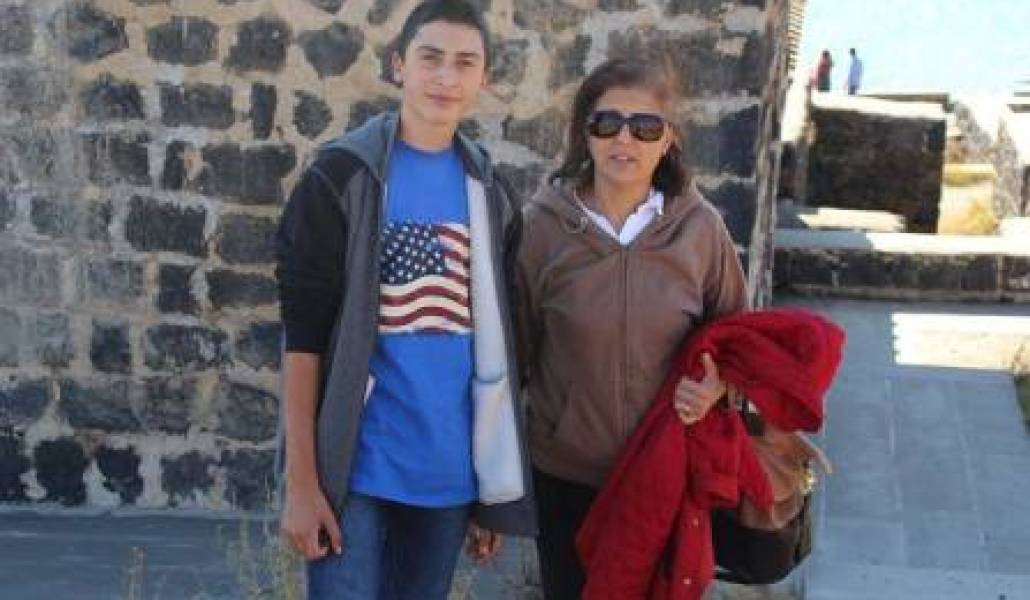
“When you talk to locals, the first words you hear from their lips is that they are unemployed. We are also unemployed,” says Tiruhi Petros, a Syrian-Armenian who moved to Armenia with her son three years ago and settled in her historical homeland. She says the most difficult and dangerous moments they experienced during the long journey were in Turkey. “We did not go to Lebanon because the road was closed. We decided to come to Armenia through Turkey. Without much consideration, we set off at once taking only one suitcase with us. We tried to be very careful because we knew that people were being kidnapped just from the road. We were stopped three times, once I even managed to hide my son. Many of us wore headscarves for them (Turks) to think that we were Muslims, but they knew everything well. But they did not harm us. Only one of the soldiers said to me, “Go and never come back again, things will be even worse here…” We somehow got to the border villages. The situation was comparatively calmer there. We received a friendly welcome. I know Turkish but we did not stay there long because the driver immediately brought us to Gyumri. My husband’s uncle and his family live in the city,” says Mrs Tiruhi. She says Armenia is a good place for living if one has a job and is able to cover his minimal needs. I worked as a nurse in Aleppo and my husband was a turner. When they began to frighten my husband threatening to kill him, he came to Armenia. He found a job here and began to work but soon he got ill and was dismissed. Unable to find another job in Armenia, he left for Russia where he encountered the same difficulties and returned to Armenia. Now he is working in Yerevan, and I have to stay in Gyumri to take care of our son who studies at a local school. My son loves his school. At first he was a little embarrassed, he used to complain saying, “Why did we ever come here? I want to go back [to Aleppo].” But now he does not want to return to Syria. I also found a job in a local confectionary factory but I could not stay there long as I was working 12-14 hours a day for 2000 drams. Now I am looking for a job, it does not matter where I shall be employed in Yerevan or in Gyumri, the most important is that I can find a job and we can live on our salary. I have applied to a number of organizations because I think that they cannot provide us material aid for ever. If we find jobs we shall not need their assistance.” Mrs Tiruhi says people in Armenia are more developed than people in Syria, however, she has observed certain qualities which are not typical of Syrian Armenians. “I could not find the sincerity warmth here that we saw in Aleppo. Here, I cannot understand whether the person in front of me is sincere or not. Armenians in Syria were very united, perhaps the reason is that there were few of us and we lived in a foreign country… Another thing I have noticed here is that people are not truly happy during the New Year holidays. It seems that they lay tables for others and not for themselves. When we lived in Aleppo, all our relatives got together and we celebrated and feasted together. I visited Armenia in 1991 but I can say that everything has changed ever since. I do not see the happiness that I saw during my previous visit.” Mrs Tiruhi says that she has moved to Armenia and has overcome numerous difficulties only for her son. “We all worked in Aleppo, and my son was left alone at home. I I had that constant fear that something was going to happen to him. I came here to save my son determined to return to Syria as soon as the situation deescalated. But as you see the situation is getting even worse. Anyway, my son is very happy here, he likes the city. The most important thing for me is my son’s security. I also have two daughters. One lives in Latakia with her family. They other went to Canada two months ago. My parents and relatives live there, but I preferred to stay in Armenia. I try to be optimistic and not to remember the years spent in Aleppo…I hope everything will be fine. I just remember every time that many families here are worse off now than us,” she said.