Nagorno-Karabakh seen as Russia’s next land grab
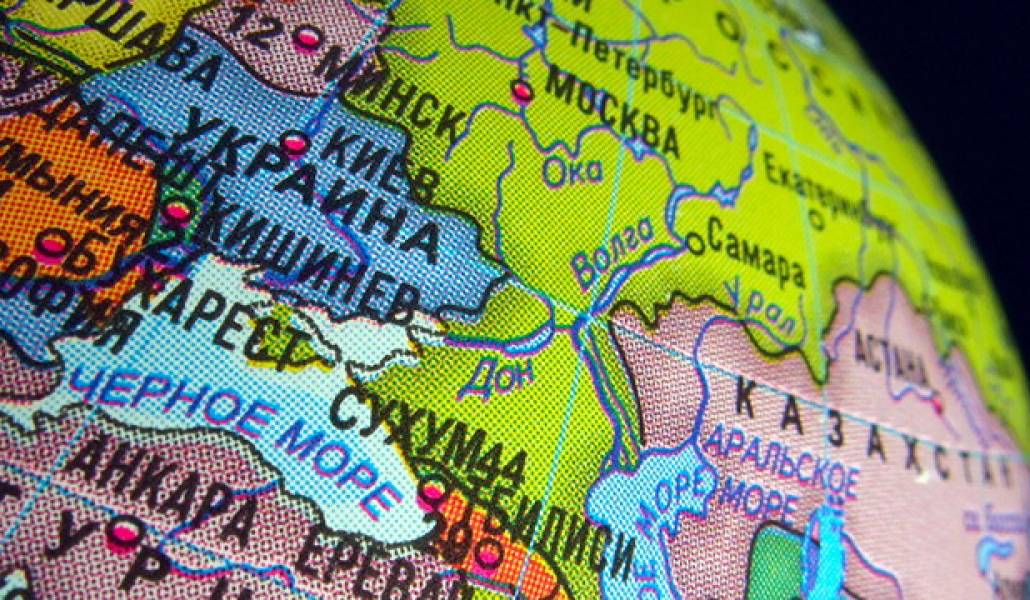
Ukraine isn't the only place where Russia is stirring up trouble. Since the Soviet Union broke up in 1991, Moscow has routinely supported secessionists in bordering states, to coerce those states into accepting its dictates. Its latest such effort is unfolding in the South Caucasus, The New York Time writes. The author of the article is Brenda Shaffer, a professor of political science at the University of Haifa. “In recent weeks, Moscow seems to have been aggravating a longstanding conflict between Armenia and Azerbaijan playing peacemaking overlord to both. In the first week of August, as many as 40 Armenian and Azerbaijani soldiers were reported killed in heavy fighting near their border, just before a summit meeting convened by Russia’s president, Vladimir Putin,” she writes. “Conflict between Armenia and Azerbaijan is not new. From 1992 to 1994, war raged over which former Soviet republic would control the autonomous area of Nagorno-Karabakh, a mountainous region with a large Christian Armenian population of about 90,000 within the borders of largely Muslim Azerbaijan. The conflict has often been framed as “ethic” but Moscow has fed the antagonisms. That war ended with an Armenian military force, highly integrated with Russia’s military, in charge of the zone. The war had killed 30,000 people and made another million refugees. Even today, Armenia controls nearly 20 percent of Azerbaijan’s territory, comprising most of Nagorno-Karabakh and several surrounding regions. Despite a ceasefire agreement since 1994, hostilities occasionally flare, and Russian troops run Armenia’s air defenses. Moscow also controls key elements of Armenia’s economy and infrastructure. More to the point, Russia has found ways to keep the conflict alive. Three times in the 1990s, Armenia and Azerbaijan signed peace agreements, but Russia found ways to derail Armenia’s participation. (In 1999, for example, a disgruntled journalist suspected of having been aided by Moscow assassinated Armenia’s prime minister, speaker of Parliament and other government officials.) An unresolved conflict — a “frozen conflict,” Russia calls it — gives Russian forces an excuse to enter the region and coerce both sides. Once Russian forces are in place, neither side can cooperate closely with the West without fear of retribution from Moscow. The latest violence preceded a summit meeting on Aug. 10 in Sochi, Russia, at which Mr. Putin sought an agreement on deploying additional Russian “peacekeepers” between Armenia and Azerbaijan. On July 31, Armenians began a coordinated, surprise attack in three locations. Azerbaijan’s president, Ilham H. Aliyev, and defense minister were outside their country during the attack and Mr. Aliyev had not yet agreed to attend the summit meeting. But the Armenian president, Serzh A. Sargsyan, had agreed to; it’s unlikely that his military would have initiated such a provocation without coordinating with Russia. (The meeting went on, without concrete results.) Before the meeting, Moscow had been tightening its grip on the South Caucasus, with Armenia’s tacit support. Last fall, Armenia’s government gave up its ambitions to sign a partnership agreement with the European Union and announced that it would join Moscow’s customs union instead. Renewed open warfare would give Russia an excuse to send in more troops, under the guise of peacekeeping. Destabilizing the South Caucasus could also derail a huge gas pipeline project, agreed to last December, that might lighten Europe’s dependence on Russian fuel.” The author says Washington should put the blame on Russia and resist any so-called conflict resolution that leads to deployment of additional Russian troops in the region. Finally, the West needs a strategy to prevent Moscow from grabbing another bordering region. Nagorno-Karabakh, however remote, is the next front in Russia’s efforts to rebuild its lost empire. Letting the South Caucasus lose its sovereignty to Russia would strike a deadly blow to America’s already diminished ability to seek and maintain alliances in the former Soviet Union and beyond. The full article is available here