War or Peace?
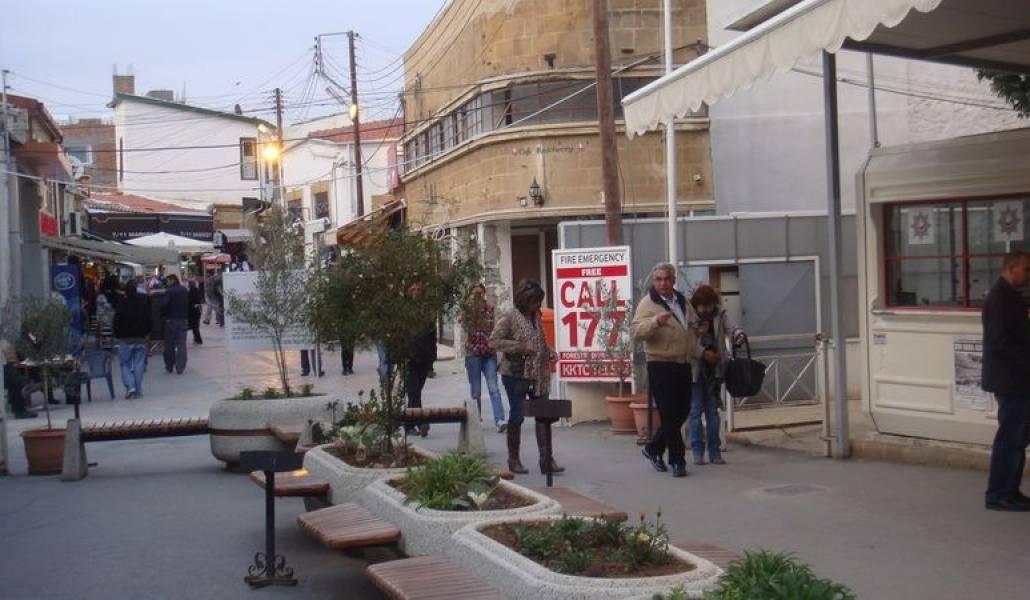
Mehmud works in a café in Kyrenia, a coastal city in Northern Cyprus. It is already five years the 30-year-old Turkish citizen resides in Northern Cyprus - the Turkish Republic of Northern Cyprus (TRNC).
Mehmud is uncertain as to how he will benefit from the settlement of the Turkish-Cyprian conflict but he no longer wants to see barbed wires between the two Cyprian republics.
The barbed wire fence was built in 1974.
"I do not hate the Greeks," says Mehmud.
Greek Cypriots do not hate Turks either but they blame Turks for dividing their country into two parts.
"Why should I have a visa to move from one side of the city to the other?" said Kostandinios, a Greek citizen of Nicosia.
Ledra is one of the central streets of Nicosia that stretches from one republic to the other. One needs a visa to get from the southern to the northern section of the street. In both sections, UN peacekeepers check passports and register the names of visitors.
Turkish Cypriots can easily get to the Greek community with visas while Turkish citizens need a Schengen Visa to enter the Republic of Cyprus, a member of the European Union.
Cyprus became a member of the European Union on May 1, 2004.
Since the Turkish invasion of 1974, the Republic of Cyprus has been divided: the northern third of the island was unilaterally declared to be the Turkish Republic of Northern Cyprus (TRNC) by its Turkish Cypriot population. The government of Northern Cyprus has not been diplomatically recognized except by the Government of Turkey since its unilateral declaration of independence in 1983 and it remains de facto outside of the EU.
"If the European Union had not recognized Southern Cyprus, the conflict would have been solved," says Mehmed Ali Talat, the former President of the de facto Turkish Republic of Northern Cyprus.
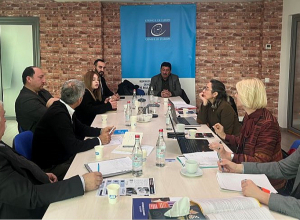
Negotiations between the Turkish and Greek communities of the Republic of Cyprus started during Talat's office.
Talat thinks that the European Union was to demand the two communities to resolve the conflict before endorsing the country's bid to become an EU member. According to Talat, EU was forced to accept Cyprus's membership as Greece threatened to put a veto on other countries, which were going to become EU members.
Talat remains publicly committed to reunification of Cyprus, with a federation of two constituent states - the Greek Cypriot State and the Turkish Cypriot State. The proposal was first made by former United Nations Secretary-General Kofi Annan and was called the Annan Plan.
The Annan Plan was rejected by Greek Cypriots in a referendum in April, 2004. Turkish Cypriots approved the Annan Plan by 64,9%.
The Greek Cypriot community and international community think that Turkey has occupied 36% territory of the country.
Today, Northern Cyprus is fully dependent of Turkey.
This unrecognized country lives on subsidiaries flowing from Turkey. Top-ranking positions are held by officials from Turkey. The new Turkish Lira is the currency in Northern Cyprus, while the currency in Southern Cyprus is the Euro.
The Turkish Army maintains a large force in Northern Cyprus. The country is practically controlled by the Turkish army. A large number of Turkish migrants reside in Northern Cyprus. According to Talat, Turkish settlers constitute 25-35% of the population.
Unlike Talat, Serdar Denktaş, Leader of the Democratic Party, thinks Northern Cyprus should be independent of Turkey.
"We can live side by side with the Greeks, but not together," he told "A1 +."
"I have friends among Greek Cypriots. We can feast together, but whenever it comes to the Cyprus dispute, we change the subject," he said adding that in some issues they have found compromises. [For example, they do not call coffee Turkish or Greek, but Cypriot]
Talks are continuing between the two communities.
"Turkey has refused to implement the UN resolution," said the Government Spokesman Mr. Stefanos Stefano adding that Turkey must withdraw its troops and expel all immigrants.
President of Cyprus Dimitris Christofias said that the solution must unite the two communities, peoples and institutions within the same federation. This implies that there will be one state with two communities.
The leaders of the two communities are scheduled to meet in Geneva on January 26.
"I do not have great expectations from the meeting," Dimitris Christofias told Armenian and Azerbaijani journalists in Nicosia within the framework of the program European Neigbourhood Journalism Network.
Will there be peace or war in the homeland of Greek Goddess of Love - Aphrodite?
"It depends on what you mean by saying "peace," said a representative of the United Nations Development Programme.
"We do not kill each other but the two communities do not live in peace. People encounter more obstacles here than in any other country of the world," he said.
Karine Asatryan
Nicosia-Kyrenia-Yerevan