PACE delegate: “There are 13 political prisoners in Armenia”
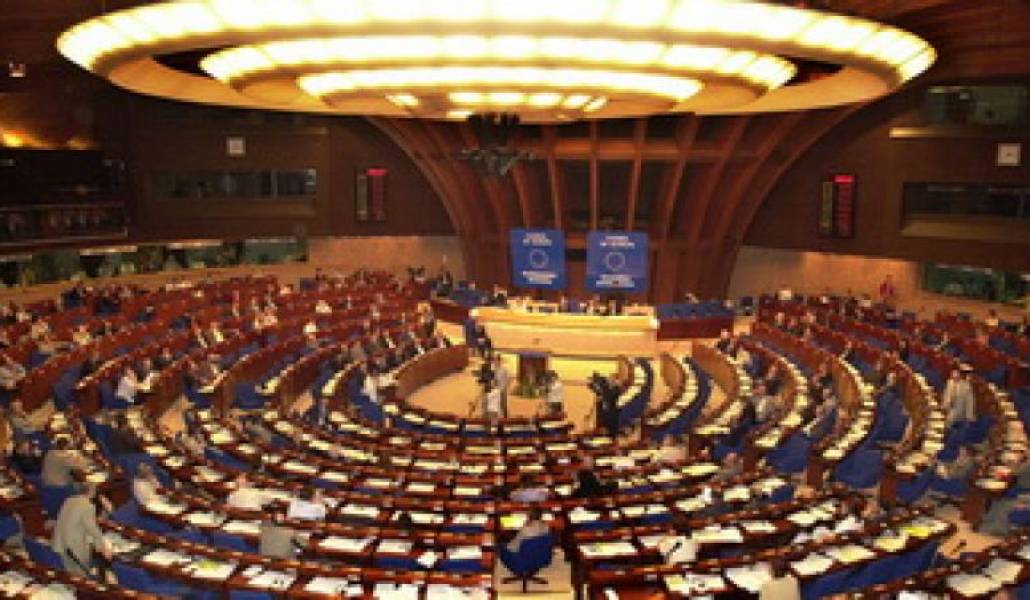
On October 6, member of the Armenian delegation PACE, to Heritage Party MP Zaruhi Postanjyan delivered a speech in the PACE Monitoring Committee
1. Today there are thirteen political prisoners in Armenia, and twelve of them were imprisoned after 1 March 2008. Even though many prisoners, including other political prisoners, were released as a result of the amnesty declared in 2009, this amnesty did not include the aforesaid thirteen political prisoners.
Proposal:
• to demand from the Armenian authorities that they declare an amnesty within one month, at the latest, which will include these thirteen political prisoners.
2. Ten people were killed on 1 March 2008, including one police officer and one soldier, and 157 soldiers and 53 police officers were injured. To date, no one has been called to account or has faced responsibility for this criminal act committed against these soldiers and police officers.
Proposal:
• to demand from the Armenian authorities that they carry out an investigation based on the reports of the March 1 Fact Finding Group and within the context of Article 2 of the European Convention on Human Rights.
3. On 1 March 2008, Armenia's then-president Robert Kocharyan signed a decree imposing martial law, thereby securing an "emergency situation" allowing for the direct involvement of the Armenian Ministry of Defense. To this day, no investigation has been launched into the fact that Armenia's armed forces were unlawfully used on 1 March 2008.
Proposal:
• to immediately carry out an investigation into the Armenian armed forces' inappropriate use of force, and to do this on the basis of international norms and Article 15 of the European Convention on Human Rights.
4. After 12 April 2004, political figures were prohibited from holding peaceful demonstrations near the Armenian presidential palace. And following 1 March 2008, political parties were forbidden to hold peaceful protests at Yerevan's Liberty Square. The police have often carried out blatant violations and unlawful interventions against those groups holding peaceful demonstrations. The victims of such violations and interventions have filed complaints, to the relevant bodies, as to the fact that their rights had been violated, but, despite the provisions of the law, no complaint was examined, and the rights of the peaceful protesters continue to be violated.
Proposal:
• to demand from the Armenian authorities that they immediately launch and investigation and subsequently punish the lawbreaking police officers; and that they present, no less than within one month, an account (court petitions, notification letters, crime statements) on the facts of prohibiting the opposition political forces' protest demonstrations in Yerevan's Liberty Square and elsewhere. This account will serve as basis so that if the problem is not resolved, it will be possible to resort to the assistance of other Council of Europe structures.
5. As a result of the changes that the Armenian government had proposed in the Armenian law "On Television and Radio," and which were approved in the Armenian National Assembly's special session held on 10 June 2010, the authorities continue to maintain their full control over television and radio broadcasting in Armenia. And the objective of these changes is:
• to block the European Court of Human Rights' 2008 decision on A1+ Television Company;
• to limit and reduce the number of television channels in Armenia;
• to limit pluralism on the airwaves; and
• to obstruct airwaves to new television companies.
Proposal:
• to demand from the Armenian authorities that they make the necessary changes in the Armenian law "On Television and Radio," no less than within one month, and thus bring it in conformity with the international standards; and that they guarantee the opposition's participation in, and the civic discussions concerning, this legislative reform process.
6. Armenia's electoral system needs improvement, and the opposition has introduced several draft laws aiming to upgrade the country's electoral code. The Armenian authorities, however, have not approved of these law proposals, and, what is more, they have sent to the Venice Commission of the Council of Europe two draft electoral codes in which the opposition's suggestions are absent.
Proposal:
• to demand from the Armenian authorities and the Venice Commission of the Council of Europe, forthwith, that they carry out their activities toward improving Armenia's electoral system jointly with the representatives of the involved opposition and civic organizations.
7. In order to resolve the above-mentioned issues and to resolve this situation, we propose that the Council of Europe Monitoring Committee's Co-rapporteurs be sent on a mission to Armenia, no less than within ten days, and demand that they prepare a corresponding report on the aforesaid issues and present it to the Council of Europe's Monitoring Committee.