ANNUAL RECORD OF THE U.S. STATE DEPARTMENT
Support A1+!Armenia is a republic with a popularly elected president and a unicameral legislature. A constitutional referendum in 2005 and presidential and National Assembly elections in 2003 were seriously flawed and did not meet international standards. The government's human rights record remained poor, and serious problems remained.
Citizens were not able freely to change their government; authorities beat pretrial detainees; the national security service and the national police force acted with impunity; authorities engaged in arbitrary arrest and detention; prison conditions were cramped and unhealthy, although slowly improving; and authorities imposed restrictions on citizens' privacy, freedom of the press, and freedom of assembly.
The judiciary, while still subject to political pressure and corruption, gained some independence from the entry into force of new constitutional revisions during the year. Journalists practiced self censorship, and the government and laws restricted religious freedom. Violence against women and spousal abuse were problems, as were trafficking in persons, discrimination against persons with disabilities, and societal harassment of homosexuals. There were reports of forced labor.
The U.S. human rights strategy for the country focused on promoting democratic institutions and processes, independent media, freedom of assembly, a vibrant civil society, the rule of law, human rights, freedom of religion, and adoption of concrete measures to combat trafficking. In anticipation of parliamentary and presidential elections in 2007 and 2008, respectively, U.S. assistance programs sought to improve electoral systems, procedures, and infrastructure.
The country's five-year Millennium Challenge Compact is tied to its performance on these and other indicators related to good governance. It remains eligible for funding under the compact despite its regression in democratic governance indicators during the year; however, U.S. officials warned the government that continued funding is contingent upon its progress in that area.
The U.S. Government continued implementation of its three-year democracy promotion strategy, which focused on enhancing the capabilities of the election administration, including working to produce accurate voter lists, providing public information and voter education, developing a democratic political culture, building public opinion polling capacity, strengthening fair electoral adjudication, enhancing election monitoring capabilities, strengthening political parties, and increasing independent media coverage of elections.
U.S. grants funded production of a documentary about participatory democracy in one local village, as well as several public-awareness campaigns on voting procedures and the establishment of centers to teach young people about democratic governance.
During the year U.S. officials consistently emphasized the importance of media freedom and responsibility in contacts with high-level government officials, media directors, and journalists. The United States funded a program to develop professional and sustainable media outlets, decrease the media's heavy dependence on sponsorship from political and private interests, and encourage outlets to adjust their programming to respond to public concerns.
Building on the successes of earlier efforts, the program supported training and technical assistance to help media outlets qualify for and repay loans provided by the United States. The program also established a television ratings system that would provide information critical to helping media outlets develop audience-based programming and increase advertising revenues. Under the International Visitor Leadership Program, the U.S. Government sent eight print journalists and eight broadcast journalists to the United States to learn about the media's role in the U.S. midterm elections.
To help increase public access to independent sources of information, U.S. programs facilitated the technical and programmatic transfer of Internet Connectivity Centers, which had been installed in 2005, to the Ministry of Education. The centers connected the country's citizens and schoolchildren with one another as well as to the rest of the world. Through the centers, a nationwide network of schools and communities engaged in organized discussion forums, courses, and other learning activities, including curricula on principles of democracy, civic involvement, and community development.
Two American Corners provided information about U.S. democratic institutions and facilitated cultural events, including an ongoing series of guest lectures by U.S. officials and exchange program alumni. Lecture topics included U.S. constitutional amendments, civil society and the state in America, American journalism and politics, grassroots political work in the United States, and the U.S. midterm elections.
U.S. officials promoted a vibrant civil society by encouraging the government, independent and opposition political parties, and civil society organizations to engage in constructive dialogue on governance issues. With substantial U.S. funding, local NGOs pursued initiatives to promote human rights, democratic development, and civil society. These efforts to strengthen civil society produced concrete results.
A government-proposed bill on lobbying, originally introduced and tabled in the National Assembly in 2005, resurfaced and threatened to significantly curtail the ability of civil society groups to advocate reform; however, effective lobbying by local and international NGOs--many of which the United States supported--persuaded the National Assembly to table the bill again. Additional U.S. grants improved the technical skills of NGOs.
U.S. officials in the country urged the government to respect freedom of assembly and closely monitored the few demonstrations and rallies that took place during the year.
To promote the rule of law and fight corruption, the United States provided grants that supported anticorruption workshops and publications and facilitated the publication of 12 investigative reports on corruption cases around the country. U.S. programs also helped support the new Chamber of Advocates, which began work in 2005 to establish a code of ethics for attorneys and in September held the first competitive and transparent bar exam in the country's history.
The United States conducted several training programs for judges and attorneys with the aim of bringing law enforcement and judicial practices into line with international standards. Specifically, U.S. officials conducted a seminar to familiarize members of the judicial branch with the European Convention on Human Rights and related case law and published 300 copies of the Manual on the Practice of the European Court of Human Rights for dissemination to defense lawyers and prosecutors.
The U.S. Government also made a concentrated effort to improve criminal procedure laws in accordance with international standards by bringing experts to the United States to review draft legislation with local authorities. The United States also encouraged the president's office to enhance its anticorruption efforts. To fight a pervasive culture of corruption, every U.S. assistance program during the year included anticorruption components.
To promote respect for human rights, U.S. grants funded public-awareness campaigns and training workshops on domestic violence. U.S. officials in the country maintained close, collaborative relations with local human rights defenders and representatives of human rights NGOs.
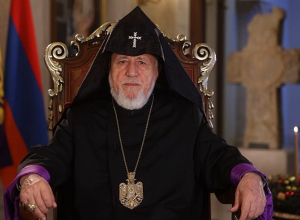
The ambassador and other U.S. officials frequently discussed religious freedom problems with government and religious leaders as part of the overall policy to promote human rights. The U.S. Government maintained close contact with the head of the Armenian Apostolic Church, the country's national church; leaders of other religious and ecumenical groups in the country; and regional representatives of foreign-based religious groups, such as the Church of Jesus Christ of Latter-day Saints, Jehovah's Witnesses, and Baha'is, and raised their concerns with the government.
U.S. officials took an active role in policy forums and NGO roundtables regarding religious freedom. In meetings with government officials, U.S. officials consistently raised the importance of the government establishing alternatives to military service for Jehovah's Witnesses who are conscientious objectors. An American Corner lecture in December addressed the topic of religion in the United States.
Combating human trafficking in the country remained a top priority, and U.S. diplomacy on this front produced concrete results. U.S. officials met frequently with high-level members of the government, resulting in the allocation of funds for the government's national action plan on trafficking and the restructuring of the prosecutor general's antitrafficking unit. One visiting U.S. official delivered an address at an international antitrafficking conference in Yerevan that was covered by national media. The United States also funded a program that provided a safe haven and medical, social, and legal services for trafficking victims, facilitated the repatriation of 10 trafficking victims, and supported a victim hotline.
The United States funded two comprehensive antitrafficking studies and published their conclusions. In June the United States conducted an antitrafficking seminar for judges, prosecutors, investigators, and police. The United States also funded the distribution of an antitrafficking manual for the country's consular personnel stationed abroad, as well as a survey of the country's laws to uncover gaps in antitrafficking statutes. The United States also contributed significant funding to the Organization of Security and Cooperation in Europe's robust antitrafficking programs in the country.