“IF WE ELECT A MAYOR THAT IS NOT THE END OF THE WORLD”
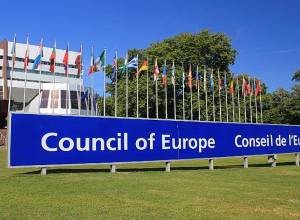
Support A1+!The President of the Congress of Local and Regional Authorities of the Council of Europe, Yavuz Mildon, will soon arrive in Armenian on an official visit. The Congress is one of the three CoE political institutes.
November 10 marks Day of Local Government in Armenia. Mr. Mildon has issued a congratulatory message on this occasion.
''The Congress welcomes the initiative of the Communities’ Association and the Government of Armenia to celebrate Day of Local Government, on 10 November 2008, and mark it with joint activities raising public awareness of the importance and workings of local governance. “It is a symbolic occasion to show the continuity of action for the benefit of communities in Armenia, reaffirm the commitment to local democracy and awaken people’s activism,” he said, adding that Day of Local Government fit perfectly with the European Local Democracy Week.
Note, the Congress had deployed 10 observers to monitor the local elections of September 28 in Yerevan's communities of Kentron, Nor Nork, Nork-Marash, Davitashen and Shengavit. Another 13 observers watched the local elections in the marzes of Armavir, Lori and Tavush on October 19.
A1+ tried to know Yavuz Mildon's opinion about Armenian elections to self-government bodies.
Local elections in Armenia are long processes because they don't take place on the same day. We have observed part of these elections. It seems that the elections are in line with the requirements of the Council of Europe but, as I have already mentioned, we have observed only a part. So, we are waiting for the end and only then we shall share our opinion. But remember that there is a positive evaluation for the organisation of the elections in Armenia although there are some concerns about the staff of electors, voters and some concerns about Election Day. Anyway, it is going on in a positive way. But I would like to mention that there is no protect democracy for sure that there are some impacts or some concerns. But I believe that they will better in future. I would also like to remind that Armenia has to stay in line with the standards of the Council of Europe, it means with the decisions of the European Court of Human Rights. At the Congress we are following the situation, our reporters are following the development of local and regional democracy in Armenia and after the elections, for sure, after establishing new municipal councils in all regional and mostly local entities, we shall stay in contact with the local representatives and government of Armenia.
Is it possible to use e-voting in Armenia taking into consideration the election processes in the country?
Everything is possible. E-voting is even possible in some big countries and in old democracies. I think that e-voting is possible everywhere, also in local elections. For me the most important is the confidentiality of the vote. Confidentiality should be guaranteed during the whole voting process. When the voter takes the ballot paper from the election commission and goes to the cabin and then to the polling box he should be aware of the confidentiality of the vote. He doesn’t have to show for which party or candidate he has voted for as this confidentiality is not preserved during the whole process. So, in e-democracy it will be easier to achieve the secrecy of the vote and we have to be well aware of the confidentiality of the vote. I think that in future e-voting can also be applied in Armenia. Why not?
Mayor of Yerevan City is elective today. What is your opinion on this?
But I have some information from Armenia that the post will be elective in Yerevan in future. A non-elective mayor is incompliant with the standards of the CoE and even with the standards of the European Charter of Local Self-Government. We hope that it will be in line very soon and, in that way, the system of local democracy will be in line with the CoE. If the mayor of Yerevan is not elective it will be a big concern regarding the local democracy in Armenia because Yerevan is the capital city and the capital needs an elected mayor.
And what is your advice to our authorities with regard to election processes? What steps should they take to better electoral processes?
I would like to talk about the post-election period. After the elections when we elect a mayor that is not the end of the world. So, we elect a mayor and after that we have to give him some competences and some financial resources. It is very important. Then we shall watch the situation in Armenia to see if the municipalities have financial support of the government and financial opportunities for the functioning of local systems because without financial resources nothing is possible. For that reason I hope that in Armenia the financial opportunities for the local entities will be in line with that of other countries of the Council of Europe as in that way the mayors and the local representatives will become the closest people to citizens. As to the principle of popularity they have to help the citizens in the post role. Therfore, I say they need some financial resources.
The lowest voter turnout in Armenia was registered during the recent local elections. What is your opinion? What should we do to stimulate voters?
That is not the case only in Armenia. That is the case in many countries. Of course, it is a concern for the Congress. We are working in that connection. We are trying to convince the governments and the local bodies to share their activities with the people and to establish a system and to convince the local people to be involved in that system on a local and national level. The problem is that if people think their vote is not decisive, that is not their vote. For that reason we have to convince people that their voting will be a plus and to share our activities with people. Then we need to inform our citizens regularly, not only during election campaigns but constantly, about the functioning of local systems. I think that in future if we share our activities and inform them of voting processes there will be a big majority of people to vote.
Karine Asatryan