U.S. GOVERNMENT FUNDS H2 ECOnomy's PROLIFERATION PREVENTION PROJECT
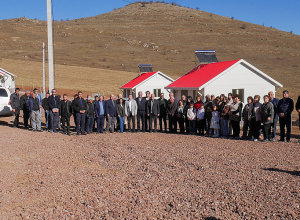
Support A1+!On April 12, 2007, H2 Economy unveiled a renewable energy system that it developed as part of the U.S. government's Global Initiatives for Proliferation Prevention (GIPP) project. The U.S. Department of Energy has provided about 1.5 million USD for this project, of which 620 thousand USD has been allocated to H2 ECOnomy. SolarEn International, a U.S. company specializing in renewable energy, provided a matching in-kind and cash contribution.
The GIPP program helps re-direct scientists and engineers who formerly engaged in industries related to the production of weapons of mass destruction to sustainable, non-military employment. The aim of the program is to create employment opportunities for these scientists and engineers by establishing a partnership among the scientists, U.S. industrial firms, and U.S. national laboratories. This provides them with a way to put their skills to use in the civilian sector, and also helps lead to advances in such sectors as homeland security, medicine, and energy. The program thus achieves nonproliferation goals while leading to innovations that benefit all countries.
As part of this program, H2 ECOnomy began participating in a GIPP project on fuel cell components in 2004. Based on these components, in 2006-2007 H2 ECOnomy prototyped and installed a new fuel cell system coupled with solar panels that can provide an uninterrupted power supply of up to 1000 W during power outages. This system has the potential to help develop Armenia's renewable energy sector.