«NAGORNO-KARABAKH CONFLICT MAY BE RIPE FOR TREATMENT»
Support A1+!The Security Council met on January 16th to hear a briefing by the Chairman-in-Office of the Organisation for Security and Cooperation in Europe (OSCE).
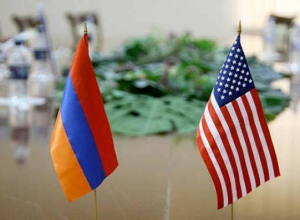
Among the priorities for the Belgian Chairmanship of the Organisation for Security and Cooperation in Europe (OSCE) was institutional reform, seeking a better balance between the various dimensions of its approach to security, promoting the rule of law, and resolving conflicts and crises, Foreign Minister Karel De Gucht told the Security Council this morning. He said that among the priorities of the year would “frozen conflicts” such as Transnistria, South Ossetia, and Nagorno-Karabakh. The OSCE did not have the resources to impose solutions, but could facilitate the emergence of a solution if the necessary will existed among the parties. Mr. De Gucht noted that in 2005, there had been a rapprochement between Armenia and Azerbaijan on Nagorno-Karabakh. The OSCE wanted to contribute to ensure that that rapprochement was reflected in the settlement of the conflict.
Responding to questions, Mr. DE GUCHT said that the OSCE was in the driver’s seat with regard to South Ossetia, and hoped its initial judgement was correct, namely that “the conflict may be ripe for treatment”. The same went for Nagorno-Karabakh, on which the Presidents of Armenia and Azerbaijan would be meeting in February. Before that meeting took place, he would go to the region and meet with both Presidents to prepare for their meeting.