RURAL POVERTY HAS NOT BEEN REDUCED
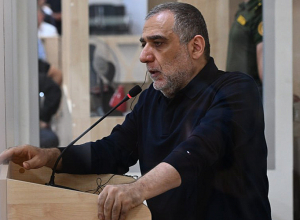
Support A1+!“The recent high growth rates in agriculture have not lead to a significant reduction in overall rural poverty”, said today Dr. Max Spoor, Associate Professor of Social Studies at the Centre for the Study of Transition and Development (CESTRAD) in the Hague.
He is the author of the Paper titled “Land Reform, Rural Poverty and Inequality: A Pro-Poor Approach to Land Policies” which was presented today at the UN House in Yerevan, by the United Nations Development Programme (UNDP).
Spoor argues that role of small land ownership, as a safeguard against poverty, is diminishing and this is the key reason why rural poverty continues. Small land plots owned by rural households are less able to provide for the food needs of families, particularly with rapidly changing markets where the bargaining position of small peasants is weak.
The Paper notes that during the period of egalitarian land reform in the early 1990s, only a part of the total agricultural land area of the country was distributed. According to Dr. Spoor: “Armenia has entered a new phase of land reform through a massive transfer of remaining state-owned land to the jurisdiction of local communities. This land transfer programme should be used in order to strengthen the weak position of the extremely small peasant farms, as a primary tool of pro-poor land policies.”
The Paper also recommends the gradual implementation of Armenia’s commitments under the WTO agreement and argues that a rapid introduction of VAT on agricultural products should be avoided.