CoE calls on Armenian authorities to criminalise forced marriages conducted without valid consent
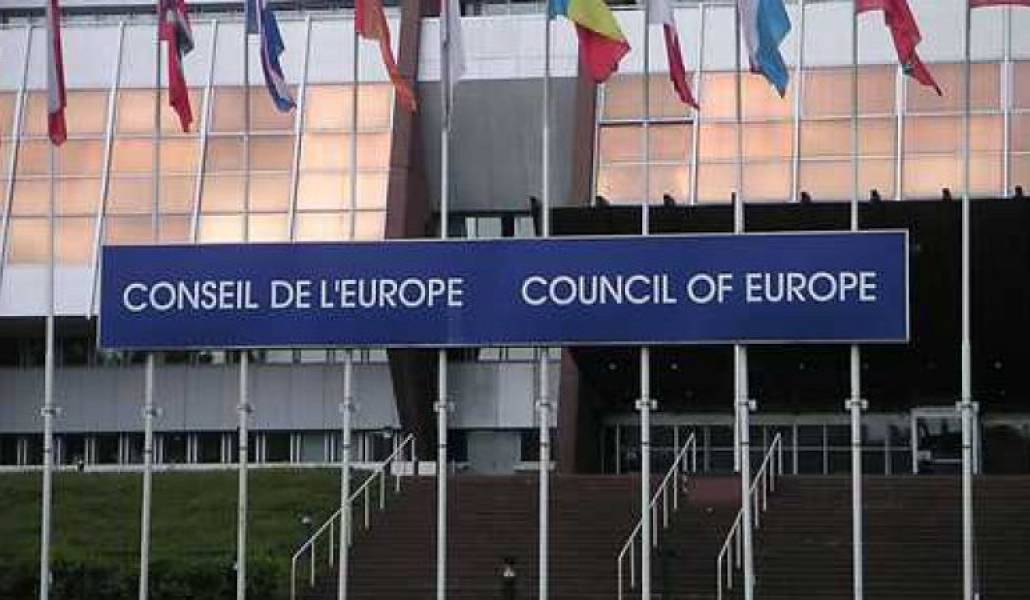
The Council of Europe Advisory Committee on the Framework Convention for the Protection of National Minorities has published its Fourth Opinion on Armenia together with the government comments. "A climate of tolerance and dialogue between the majority population and national minority groups generally prevails in Armenia, said the new report published by the Council of Europe today. However, economic difficulties continue to adversely affect the population; more effort is required to ensure full access to education for all, and criminalise forced early marriages," it said in part. "The Advisory Committee on the Framework Convention for the Protection of National Minorities (FCNM) acknowledged the commitment of Armenian population and authorities to promoting the principles of equality and non-discrimination, including rights of national minorities. Notably, the amended constitution introduces a specific provision on the protection of the right to a national and ethnic identity; the new Electoral Code provides for parliamentary representation for the four largest national minorities in the country. Other positive observations include the continued support of cultural projects and media for national minorities; improved possibilities for self-identification during the census of 2011 where the questions on ethnic affiliation and languages spoken were open-ended and optional. The Council of Europe experts also find it commendable that, in spite of economic difficulties, Armenia admitted into the country more than 20,000 people, mainly of Armenian and Assyrian descent fleeing the conflict in Syria. However, even though the authorities promote inter-ethnic tolerance and understanding in society, Armenia is widely perceived as a mono-ethnic homogenous and mono-religious state. This, coupled with lack of media attention, limits the visibility of minorities and leads to their side-lining. The unresolved Nagorno-Karabakh conflict and the closed borders with neighbouring states have led to socio-economic hardships, which are particularly acute in poorer regions in secluded mountainous areas, inhabited largely by the Yezidi national minority. This community has lately seen the most significant drop in numbers due to emigration. School drop-out rates for Yezidi children, in particular girls, continue to be high. The persisting tradition of arranged early marriages further undermines their chances of completing the compulsory 12-year education cycle. Redoubling efforts to eliminate difficulties experiences by Yezidi children in access to education and reviewing legislation with a view to criminalising forced marriages conducted under pressure or abuse, are among recommendations for immediate action given by the Council of Europe experts to the Armenian authorities. Other recommendations include ensuring participation of national minorities and civil society in preparing the new Law on National Minorities, which is called for under the revised Constitution, and other legislation, encouraging the use of minority languages in contacts with local administration, introducing a possibility of declaring multiple ethnic affiliations for future censuses, as well as reviewing criminal legislation to make racial hatred and other hate motives an aggravating circumstance for all crimes." The report was published together with the Armenian authorities´ comments. Below are recommendations for immediate action:
- engage in a wide consultation process with civil society and national minority organisations prior to and during the drafting of the Law on National Minorities and other legislation impacting on the enjoyment of rights of persons belonging to national minorities; ensure that such legislation is fully compatible with international standards;
- develop a proactive approach to promote minority rights protection in accordance with the Framework Convention; ensure that policies affecting the enjoyment of rights under the Framework Convention are elaborated in consultation with minority representatives to reflect their real needs;
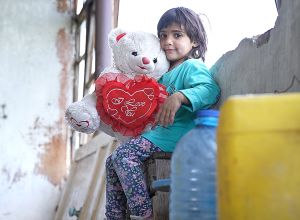
- redouble efforts to eliminate without further delay difficulties experienced by Yezidi children, in particular girls, in access to education; continue efforts to provide preschool education to all children; review legislation, in line with international human rights standards with a view to criminalising forced marriages conducted without the valid consent of both spouses, where pressure or abuse is used;
- consult with local representatives of national minorities to assess the demand for the use of minority languages in relations with administrative authorities and for topographical indications in the geographical areas inhabited by a substantial number of persons belonging to national minorities; carry out an awareness-raising campaign encouraging the use of minority languages in contacts with local administration.